
Seamless Tube Manufacturing Plant Cost: Procurement Guide & Cost Optimization
Explore China seamless tube plant cost drivers, hot vs cold processing premiums, carbon costs, and procurement strategies to reduce per-ton landed cost.
Seamless Tube Manufacturing Plant Cost Procurement Guide
One of the most common mistakes international buyers make when evaluating China seamless tube projects is comparing factory quotes as if they reflect the same cost base. They do not. A hot-rolled carbon steel tube from a high-volume mill, a cold-drawn precision tube from an alloy specialist, and a stainless 304L tube from a southern trading cluster can have completely different cost structures even when the outer diameter and wall thickness look similar.
This guide breaks down the real per-ton cost structure of seamless tube manufacturing plants, explains how process route and material grade move pricing, and gives procurement teams a practical framework for quote evaluation and supplier negotiation.
Cost Breakdown: Where the Money Goes in Seamless Tube Production
1. Direct Material Cost: The Dominant Cost Driver
The single largest cost component in seamless tube manufacturing is direct material, mainly steel billet. In China’s current market environment, direct material typically accounts for 70% to 80% of total production cost.
Based on China’s 2025 average seamless pipe price of RMB 4,600–4,700/metric ton, this translates into the following planning cost structure:
| Cost Element | Typical Share of Total Cost | RMB/t Equivalent | USD/t Equivalent |
|---|---|---|---|
| Direct material steel billet | 70%–80% | 3,220–3,760 | 441–515 |
| Energy and utilities | 10%–15% | 460–705 | 63–97 |
| Direct labor | 5%–8% | 230–376 | 31–52 |
| Manufacturing overhead, depreciation, outsourcing | Balance, often 7%–15% depending on plant age and outsourcing | 322–705 | 44–97 |
Steel billet prices are highly volatile because they are driven by upstream commodities such as iron ore, coke, and scrap. For a buyer, this means the most important number in any seamless tube quote is the billet assumption used by the mill. If two suppliers quote the same tube but one assumes a lower billet price, the gap may disappear when billet prices correct.
2. Processing and Finishing Cost: Hot-Rolled vs Cold-Rolled
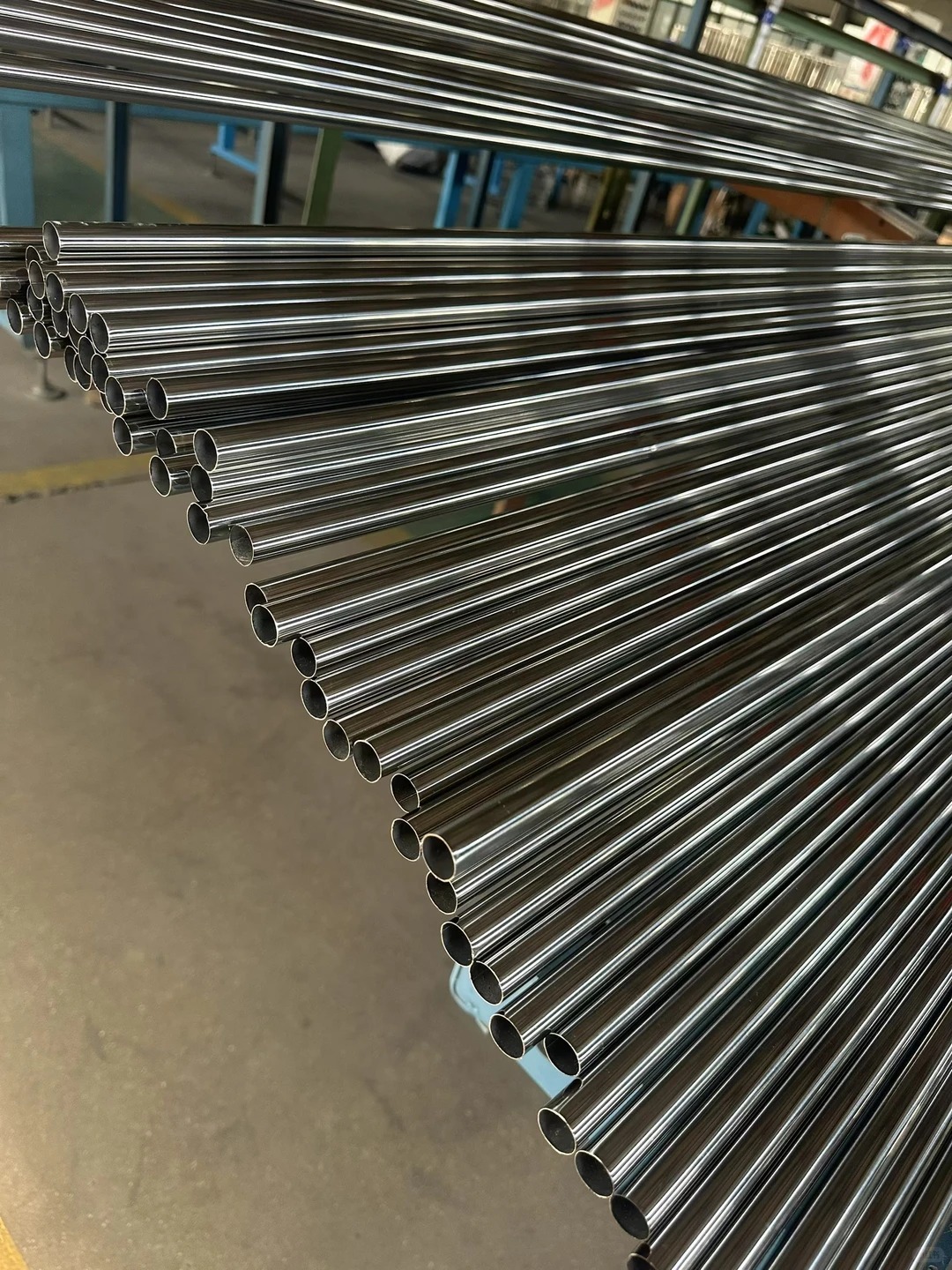
Processing route is the second major cost lever. Hot-rolled seamless tube has a shorter process route: heating to approximately 1,200°C, piercing, rolling, and sizing. It is efficient for large-diameter, thick-wall tubes and large-volume production.
Cold-rolled or cold-drawn seamless tube adds cold working, annealing, acid pickling, and sometimes phosphating. This improves dimensional accuracy and surface quality, but increases energy use and labor hours.
| Processing Route or Upgrade | Cost Impact | RMB/t Reference | USD/t Reference |
|---|---|---|---|
| Hot-rolled carbon steel seamless tube | Baseline | 4,600–4,700 | 630–644 |
| Cold-rolled/cold-drawn carbon steel tube | +15%–20% vs hot-rolled | 5,290–5,640 | 725–773 |
| Alloy steel billet upgrade | Raw material cost doubles or more vs carbon steel | Project-specific | Project-specific |
| Stainless 304/316L upgrade | Raw material cost multiple of carbon steel | Project-specific | Project-specific |
| Acid pickling and phosphating | Usually included in cold-route or manufacturing overhead | Included above | Included above |
| Heat treatment, annealing, normalizing | High energy input; may be quoted separately for pressure-grade tubes | Project-specific | Project-specific |
| Non-standard ultra-thin-wall or ultra-large-diameter | Higher per-ton cost due to lower yield and harder forming | Quote-specific | Quote-specific |
| Outsourced processing | Classified under manufacturing overhead | Varies by plant | Varies by plant |
The most actionable takeaway for buyers is this: if you do not need cold-rolled precision, do not pay for it. Many buyers request cold-drawn tolerances for applications that hot-rolled tube can satisfy, adding 15% to 20% to the price without a functional benefit.
3. Finished Product Cost / All-In Price Reference
The table below combines the baseline price, processing route premium, carbon cost, and industry profit into a practical finished-product reference for Chinese seamless tube.
| Product Configuration | Pricing Benchmark | RMB/t | USD/t |
|---|---|---|---|
| Hot-rolled carbon steel seamless pipe, standard specs | 2025 China national average | 4,600–4,700 | 630–644 |
| Cold-drawn/cold-rolled carbon steel precision tube | Add 15%–20% | 5,290–5,640 | 725–773 |
| Carbon cost, blast furnace-integrated mill | Additional for integrated mills | 160–176 | 22–24 |
| Industry average profit | Embedded in market price | 50–80 | 7–11 |
| Alloy steel or stainless seamless tube | Raw material multiple; avoid carbon-steel baseline comparison | Request project quote | Request project quote |
The profit column is critical. Standard seamless tube is currently a micro-profit product in China. Mills may earn as little as USD 7–11/t on average, which means a small raw material swing or an unplanned yield loss can quickly turn a profitable order into a loss.
4 Key Factors That Determine Cost
1. Raw Material Price Exposure Is the Most Overlooked Risk
Because direct material is 70%–80% of total cost, a small billet price move has an outsized impact on finished tube pricing. Assuming a material share of 75%, the following table shows how billet price changes affect total cost.
| Billet Price Change | Total Cost Impact at 75% Material Share | RMB/t Cost Change | USD/t Cost Change |
|---|---|---|---|
| +5% | +3.75% | 173–176 | 24 |
| +10% | +7.50% | 345–353 | 47–48 |
| +20% | +15.00% | 690–705 | 95–97 |
A 10% billet price increase can generate a cost rise of 4.3 to 7.1 times the industry’s average profit of RMB 50–80/t. Smart buyers agree on a billet benchmark and price adjustment clause in long-term contracts instead of accepting a fixed price that may become impossible for the mill to honor.
2. Order Quantity and Production Scale
Seamless tube plants spread fixed costs across production volume. Large-batch, standard-size orders allow the mill to run longer campaigns, reduce roll changes, and improve heating furnace utilization.
| Order Profile | Recommended Route | Cost Behavior |
|---|---|---|
| Large-volume, large-diameter, thick-wall carbon tube | Hot-rolled | Baseline; lowest per-ton cost due to high efficiency |
| Small-batch precision tube with tight dimensional tolerance | Cold-drawn/cold-rolled | +15%–20% vs hot-rolled |
| Non-standard ultra-thin-wall or ultra-large-diameter tube | Special processing | Higher per-ton cost due to lower yield |
| Alloy or stainless small batch | Cold route or specialized mill | Raw material dominates; processing premium secondary |
For buyers, this means consolidating purchase volumes and standardizing specifications where possible is one of the fastest ways to reduce China seamless tube landed cost.
3. Quality and Defect Requirements
Quality requirements directly affect yield, inspection cost, and the risk premium built into a supplier’s quote. A lower acceptable defect rate generally means more sampling, more non-destructive testing, and stricter process control.
| Quality Tier | Typical Requirement | Price Impact | Common Application |
|---|---|---|---|
| Standard structural/mechanical tube | Basic dimensions and chemistry | Baseline RMB 4,600–4,700/t | General machinery, structural support |
| Precision hydraulic cylinder tube | Cold-drawn tolerances, surface finish, mechanical properties | +15%–20% processing premium | Hydraulic cylinders |
| High-pressure boiler/petroleum cracking tube | Strict chemistry, heat treatment, ultrasonic or eddy current testing | Higher material and testing costs | Power generation, oil and gas |
| Stainless corrosion-resistant tube | 304/316L chemistry, pickling, passivation | Raw material multiples; quote-specific | Chemical, food, medical |
Always define acceptable defect standards in writing. If you leave inspection criteria open, two mills may quote the same specification with completely different quality assumptions.
4. Carbon Cost and Environmental Compliance Are the Hidden Margin Killers
China’s carbon trading market has begun to reshape seamless tube cost. For blast furnace-integrated seamless tube mills, the carbon cost already reaches RMB 160–176/t, equivalent to USD 22–24/t.
| Carbon Cost Scenario | RMB/t | USD/t | Strategic Implication |
|---|---|---|---|
| Current blast furnace-integrated mill carbon cost | 160–176 | 22–24 | Already exceeds average mill profit by 2–3 times |
| Further carbon price rise | Above 176 | Above 24 | Can exceed total margin and force price increases or supply discipline |
For international buyers, this means environmental compliance is no longer a paperwork issue. It is a cost line item. Request clarity on whether the supplier has included carbon cost in the quotation, and audit the mill’s environmental permits and emission-control investments before placing large orders.
Procurement Best Practices
Ask for a Cost-Sheet Breakout, Not Just a Price
When requesting quotes from seamless tube plants, always ask the following:
- ✅ What is the exact steel grade and billet mill source?
- ✅ What billet benchmark price is used in this quotation?
- ✅ Is the product hot-rolled, cold-rolled, or cold-drawn?
- ✅ What yield rate has the mill assumed in the price calculation?
- ✅ What tolerance standard, heat treatment, and testing are included?
- ✅ Is carbon cost included? If so, how much per metric ton?
- ✅ What price adjustment clause applies if billet or energy costs move?
- ✅ What is the mill’s current order backlog and lead time for this specification?
A mill that cannot or will not provide a basic cost breakdown may be hiding an unstable raw material assumption.
Use Golden Samples to Lock Quality Expectations
Before mass production, approve a golden sample that defines surface finish, dimensional accuracy, end condition, and inspection acceptance. Keep one sealed sample with the supplier and one with your quality team. This is the cheapest insurance against later disputes over what was “acceptable.”
Specify Quality Standards in Writing
Include the full standard in the purchase contract, not just the material grade. For example, specify outer diameter tolerance, wall thickness tolerance, length tolerance, straightness, surface condition, heat treatment condition, and required non-destructive testing. The more precise your written specification, the less room there is for a supplier to reduce cost through informal tolerance widening.
Source from the Right Cluster: Foshan vs Wuxi
| Sourcing Cluster | Main Strengths | Watch-Outs |
|---|---|---|
| Wuxi/Jiangsu | Precision cold-drawn, alloy, hydraulic, high-end seamless tube; stronger process control | Verify whether the seller is a real manufacturer or a trader; quality may command a premium |
| Foshan/Guangdong | Stainless steel processing and export trading; export logistics convenience | Confirm actual manufacturing location and heat traceability; do not assume the seller owns the mill |
For high-volume standard carbon tube, also evaluate primary seamless pipe hubs in northern China where billet access and energy costs may be lower. Always verify the plant’s actual production location rather than relying on a sales office address.
Do Not Chase the Lowest Price
In a market with an industry profit of only RMB 50–80/t, an unusually low quote usually means something is being removed from the product or the process.
| Quoted Price Gap vs Market Average | Possible Hidden Issue | Recommended Buyer Action |
|---|---|---|
| 3%–5% below average | Lower-grade billet, wider tolerances, reduced testing | Tighten inspection and material test requirements |
| 6%–10% below average | Yield or quality trade-offs, possible secondary material | Require golden sample and mill audit |
| More than 10% below average | High risk of material substitution or nonconforming goods | Avoid or conduct full third-party factory audit |
A price difference of USD 20–30/t is rarely worth the supply-chain risk if the tube is used in pressure, structural, or safety-critical applications.
Quick Price Estimation Formula
Use this simple formula to benchmark hot-rolled carbon steel seamless tube:
Finished hot-rolled carbon tube RMB/t ≈ Delivered steel billet price + RMB 840–1,480/t conversion cost
For cold-drawn or cold-rolled precision tube:
Cold-finished tube RMB/t ≈ Hot-rolled base × 1.15–1.20
For blast furnace-integrated mills, add RMB 160–176/t for carbon cost if it is not already embedded in the conversion cost.
Worked Example
Assume a 20# carbon steel billet delivered price of RMB 3,500/t. The mill quotes a conversion cost of RMB 1,200/t.
- Hot-rolled carbon tube base: RMB 3,500 + RMB 1,200 = RMB 4,700/t
- USD equivalent: RMB 4,700 ÷ 7.3 = USD 644/t
- Cold-drawn precision tube base: RMB 4,700 × 1.15 = RMB 5,405/t
- USD equivalent: USD 740/t
- Add carbon for integrated mill: RMB 5,405 + RMB 176 = RMB 5,581/t
- Final USD reference: USD 765/t
This formula gives procurement teams a fast first-pass benchmark before requesting formal quotes.
Need Help Calculating Your Specific Requirements?
Send your target specification, annual volume, material grade, process route, accepted tolerance standard, and destination port. A detailed cost-breakdown quotation can help you verify mill assumptions, carbon surcharges, and whether a hot-rolled or cold-drawn route is actually required for your application.
Browse Related Steel Products
Frequently Asked Questions
What is the largest cost component in seamless tube manufacturing?
Direct material, mainly steel billet, typically accounts for 70% to 80% of total production cost. Against China's 2025 average seamless pipe price of RMB 4,600–4,700 per metric ton, this equals roughly RMB 3,220–3,760/t, or USD 441–515/t at a 7.3 exchange rate. Any movement in iron ore, coke, or scrap prices flows directly into final tube cost.
How much more expensive is cold-rolled or cold-drawn seamless tube than hot-rolled?
Cold-rolled or cold-drawn material usually costs 15% to 20% more than hot-rolled because it adds cold working, annealing, pickling, and more handling. Using the 2025 average hot-rolled carbon steel price, a cold-drawn carbon tube would range from about RMB 5,290 to RMB 5,640/t, or USD 725 to USD 773/t, before any carbon charge.
What is the average China seamless pipe price and industry profit?
According to Mysteel-related calculations cited in 2025, the national average seamless pipe price was RMB 4,600–4,700/t, while average profit was only RMB 50–80/t. That is roughly USD 630–644/t revenue against USD 7–11/t profit, showing how thin the margin is for standard carbon steel products.
How does carbon trading affect seamless tube plant cost?
For blast furnace-integrated seamless tube mills, carbon cost already reaches RMB 160–176 per metric ton of tube, equivalent to USD 22–24/t. Since average profit is only RMB 50–80/t, a further rise in carbon prices could erase or exceed the standard product margin, forcing mills to cut emissions, raise prices, or shift product mix.
Why are small-batch and non-standard orders more expensive?
Small batches prevent mills from spreading heating, roll-change, and overhead costs across long production runs. Non-standard sizes, especially ultra-thin-wall or ultra-large-diameter tubes, also reduce yield and require slower processing, which raises per-ton cost beyond a simple material price change.
What procurement practices help reduce seamless tube cost?
Buyers should request cost-sheet transparency, compare billet-plus-conversion pricing, and time orders when billet prices dip. From a plant-selection standpoint, prefer mills with billet price early-warning systems, inventory hedging, heat recovery, and a product mix tilted toward precision or high-value tubes, because those factories are better positioned to control cost.
What is a simple formula to estimate seamless tube cost?
A practical benchmark is: finished hot-rolled carbon tube RMB/t equals delivered billet price plus RMB 840–1,480/t conversion cost, then add RMB 160–176/t carbon for integrated mills if not already included. For cold-drawn or cold-rolled precision tube, add another 15% to 20% to the hot-rolled base.
How should buyers compare Foshan and Wuxi seamless tube suppliers?
Wuxi and the broader Jiangsu region are generally stronger for precision cold-drawn, alloy, and high-end seamless tube production, with tighter process control. Foshan and Guangdong are more active in stainless steel processing and export trading, so buyers should verify whether the supplier is a first-line manufacturer or a trader and require heat numbers and material test certificates.
Looking for a Reliable Steel Supplier?
Rubao-Chinasteel supplies high-quality steel products at factory-direct prices. MOQ from 1 ton · ISO certified · Fast global delivery.