
A36 vs Q235B Carbon Steel: What's the Difference?
A36 vs Q235B carbon steel comparison — ASTM A36 vs GB Q235B properties, strength, chemical composition, and whether they're equivalent.
A36 Carbon Steel
ASTM standard — US / North America
Q235B Carbon Steel
GB standard — China / Asia
Overview
A36 and Q235B are the most common mild structural carbon steel grades in their respective regions:
- A36 (ASTM A36): The standard structural steel in North America and many Western markets
- Q235B (GB Q235B): The most widely used structural steel in China and much of Asia
While they come from different standards systems, they are very similar in properties and often considered near-equivalent for many applications.
Quick summary: A36 and Q235B are roughly equivalent mild carbon structural steels. They have similar strength (yield ~235 MPa), good weldability, and low cost. The main differences are their standards origin (ASTM vs GB) and minor variations in chemical composition limits.
Comparison Table
| Property | ASTM A36 | GB Q235B |
|---|---|---|
| Standard | ASTM A36/A36M | GB/T 700 / GB/T 3274 |
| Region | United States / International | China / Asia |
| Type | Carbon structural steel | Carbon structural steel |
| Carbon (C) max | 0.29% (≤100mm) | 0.20% (≤16mm) |
| Manganese (Mn) | 0.60–1.20% | 0.30–0.70% |
| Phosphorus (P) max | 0.04% | 0.045% |
| Sulfur (S) max | 0.05% | 0.045% |
| Silicon (Si) max | 0.40% | 0.30% |
| Yield Strength (min) | 250 MPa (36 ksi) for ≤50mm | 235 MPa (34 ksi) for ≤16mm |
| Tensile Strength | 400–550 MPa (58–80 ksi) | 375–500 MPa (54–73 ksi) |
| Elongation (min) | 20% (8" gauge) | 26% (≤16mm) |
| Grade letter meaning | 36,000 psi yield strength | Yield Strength 235 MPa, B quality |
| Weldability | Excellent | Excellent |
| Machinability | Good | Good |
| Formability | Good | Good — Excellent |
| Corrosion Resistance | Low (carbon steel) | Low (carbon steel) |
| Cost | Reference (1x) | Often lower (~10–20% less) |
| Availability (China) | Available but often special order | Extremely abundant |
| Availability (US) | Abundant | Available via importers |
ASTM A36 — In Detail
ASTM A36 is the most commonly specified mild steel grade in the United States and has been the standard structural carbon steel for over 60 years. The “36” refers to its minimum yield strength of 36,000 psi (250 MPa).
Key Features of A36
- ASTM standard — universally recognized in engineering
- Consistent quality and predictable properties
- Excellent weldability by all common methods
- Good ductility and toughness at room temperature
- Widely available in all product forms (plate, sheet, bar, structural shapes)
- Extensive engineering data and test results available
Common Applications of A36
- Building and bridge construction
- Structural steel beams and columns
- Platework and general fabrication
- Machinery frames and bases
- Automotive components
- General purpose steel structures
- Rivets, bolts, and other fasteners (lower strength)
GB Q235B — In Detail
Q235B is the most popular structural steel grade in China, defined by the GB/T 700 standard. The name breaks down as:
- Q: “Qu” — Yield strength (屈服强度)
- 235: Minimum yield strength of 235 MPa
- B: Quality grade B (room temperature impact test required)
There are also Q235A, Q235C, and Q235D grades, with B being the most commonly specified.
Key Features of Q235B
- Widely produced in China — the most available and cost-effective grade
- Good weldability and formability
- Decent toughness at room temperature (Grade B requires V-notch impact test at 20°C)
- Available in all forms: plate, sheet, coil, bar, pipe, profiles
- Slightly lower carbon content than A36 for better ductility
- Massive production volume keeps prices competitive
Common Applications of Q235B
- Building structures and steel frameworks
- Steel profiles (H-beam, I-beam, angle, channel)
- Steel pipes and tubes
- Sheet metal fabrication and stamping
- Machinery casings and frames
- Bridge components (non-critical)
- General engineering structures
Are A36 and Q235B Equivalent?
Short answer: Approximately yes, but not 100% identical.
They are near-equivalent for most general structural applications, but there are important differences to note:
Why They’re Considered Equivalent
- Both are mild carbon structural steels
- Similar yield strength (~235–250 MPa / 34–36 ksi)
- Both have excellent weldability
- Both are used for the same types of applications
- Q235B parts are routinely accepted in projects that call for A36 — and vice versa
Why They’re NOT Identical
- Yield strength varies with thickness differently: A36’s yield drops from 36 to 32 ksi at thicker sections. Q235B’s yield drops from 235 to 215 MPa.
- Chemical composition limits differ: Q235B has lower max carbon (0.20% vs 0.29%) but also lower manganese.
- Impact testing requirements: Q235B requires Charpy V-notch impact testing (Grade B). Standard A36 does not require impact testing (A36 with supplementary requirements can).
- Standards certification: If your project requires ASTM certification, Q235B may not be accepted without additional testing.
Which One Should You Choose?
Choose A36 If:
- Your project specifies ASTM standards
- You’re shipping to North American markets
- Engineering drawings explicitly call out A36
- You need consistent, well-documented properties
- Your customer requires A36 Mill Test Certificates (MTC)
Choose Q235B If:
- Your project is in China or Asia
- Cost optimization is a priority
- General structural use where precise grade specification isn’t critical
- You need fast delivery and abundant supply in China
- Your customer accepts GB standard materials
Practical Cross-Substitution
Can I substitute Q235B for A36? In most general structural applications, yes. Q235B meets or exceeds the minimum strength of A36 and has equivalent or better weldability and ductility. However, always confirm with the project engineer or customer.
Can I substitute A36 for Q235B? Generally yes, as A36 has slightly higher strength. However, verify impact requirements — Q235B Grade B requires Charpy V-notch testing at 20°C, which standard A36 may not include unless specified with supplementary requirements.
FAQ
Is Q235B the same as A36?
They are near-equivalent but not identical. Q235B has slightly lower yield strength (235 MPa vs 250 MPa), lower carbon content, and comes from the Chinese GB standard rather than ASTM A36. For most practical applications, they can substitute for each other.
Can Q235B be welded to A36?
Yes, Q235B and A36 can be welded together without any issues. They have similar carbon content and weldability. Use standard mild steel welding electrodes (E7018 or similar).
Which is stronger, A36 or Q235B?
A36 is slightly stronger — 250 MPa (36 ksi) yield strength vs Q235B’s 235 MPa (34 ksi). However, this small difference is negligible in most general structural applications.
Is Q235B cheaper than A36?
Yes, Q235B is generally cheaper than A36, especially when sourced from China. Q235B is the most mass-produced steel grade in the world’s largest steel-producing country, giving it significant cost advantages.
What is Q235B equivalent to in ASTM?
Q235B is most commonly compared to ASTM A36, though some engineers also draw comparisons to ASTM A283 Grade D or A572 Grade 36. A36 is the closest practical equivalent.
Can Q235B be galvanized?
Yes, Q235B is commonly galvanized (hot-dip galvanized, or HDG). Its silicon content of ≤0.30% falls within the Sandelin range, which can affect galvanizing quality, but it’s still the most commonly galvanized grade in China.
Compare & Shop These Products
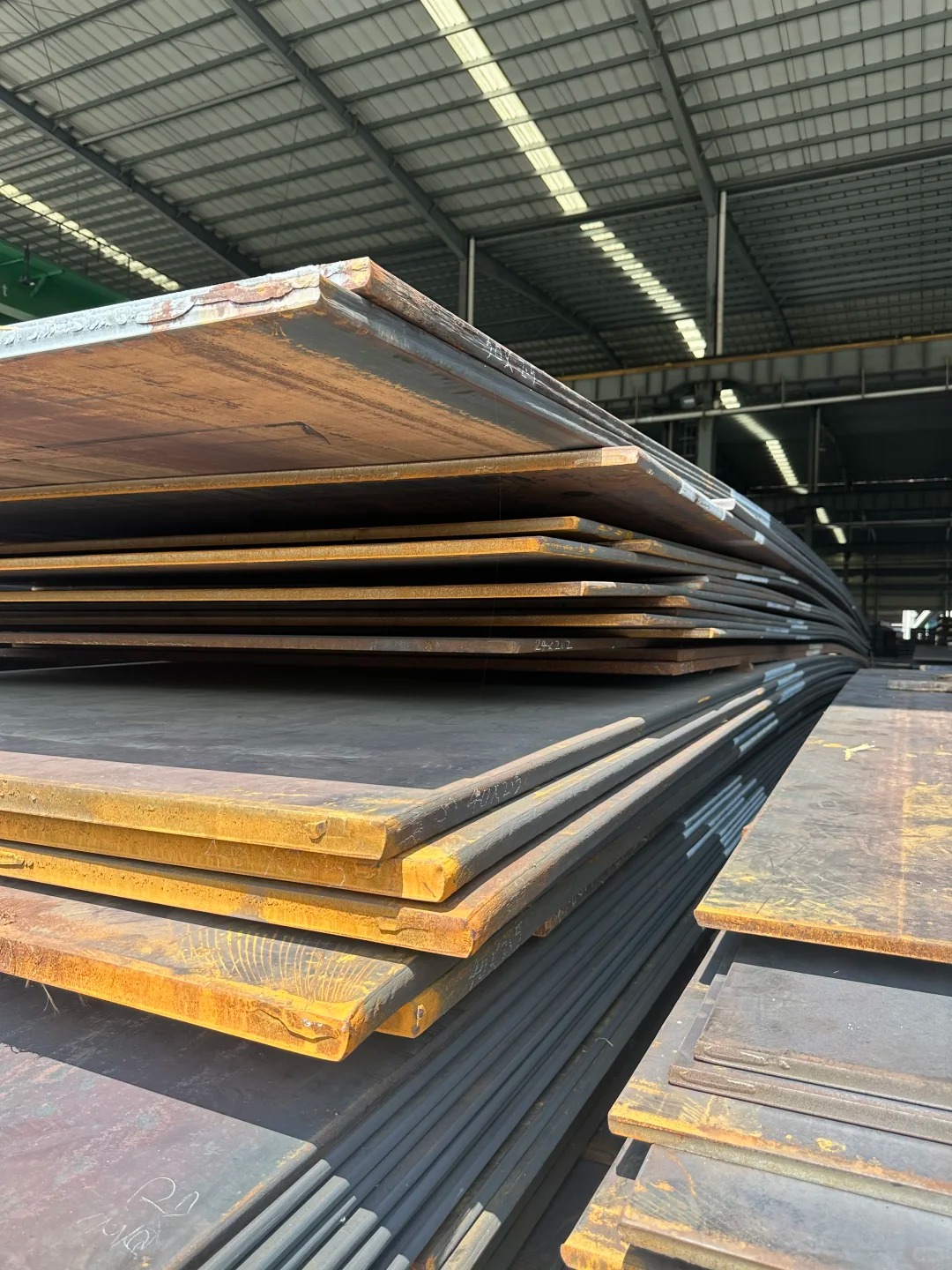
A36 Carbon Steel Sheet / Plate — Manufacturer, Price, Specifications
Grade A36View Details →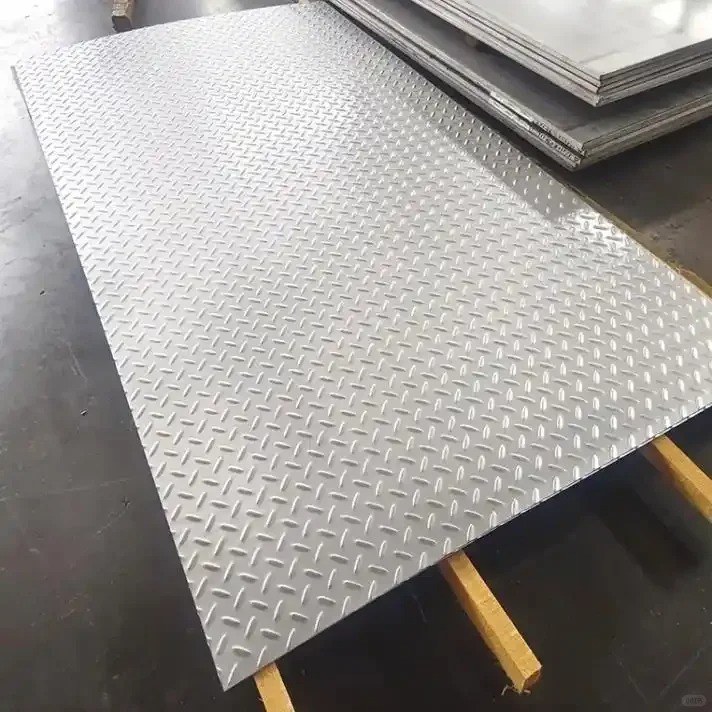
Carbon Steel Checkered Plate — Q235B Anti-Slip Floor Plate
Grade Q235BView Details →Q235B Carbon Steel Sheet / Plate — Manufacturer, Price, Specifications
Grade Q235BView Details →Q355B Carbon Steel Sheet / Plate — Manufacturer, Price, Specifications
Grade Q355BView Details →Still Not Sure Which Material to Choose?
Send us your project specifications — our engineers will help you select the right steel grade at the best price.