
Galvanized Steel: Types, Benefits, Specifications & Applications
Complete guide to galvanized steel — hot-dip galvanizing (HDG), electro-galvanizing, galvanneal, galvanized vs stainless, and how to specify it.
What is Galvanized Steel?
Galvanized steel is carbon steel that has been coated with a layer of zinc to protect it from corrosion. The zinc coating acts as both a physical barrier and a sacrificial anode — it corroded instead of the underlying steel, and even if scratched, the zinc continues to protect the exposed steel.
Galvanizing is the most common and cost-effective way to extend the life of steel exposed to outdoor and moderately corrosive environments. It’s used for everything from roofing nails to massive steel bridges.
How Galvanizing Works
The zinc coating provides corrosion protection in two ways:
1. Barrier Protection
The zinc coating physically separates the steel from moisture, oxygen, and other corrosive elements. As long as the zinc layer remains intact, the steel underneath doesn’t rust.
2. Cathodic (Sacrificial) Protection
This is the real superpower of galvanizing:
- Zinc is more electrochemically active than iron/steel
- If the coating is scratched and steel is exposed, the surrounding zinc corrodes sacrificially to protect the steel
- This works for small scratches, cut edges, and minor damage
- No other coating (paint, powder coat) provides this self-healing property
Galvanic Series (Simplified)
Most active (anode / corrodes first):
- Zinc ← Sacrifices itself to protect steel
- Steel / Iron
- Copper
- Stainless Steel Least active (cathode): Gold, platinum
Types of Galvanizing
1. Hot-Dip Galvanizing (HDG)
Process: Steel parts are dipped into a bath of molten zinc at about 450°C (840°F). The zinc metallurgically bonds to the steel surface, forming a series of zinc-iron alloy layers.
Key features:
- Most common and most durable galvanizing method
- Thick zinc coating (typically 85–170 g/m² on each side for sheet; much thicker on structural parts)
- Excellent corrosion protection
- Lowest cost per year of protection
- Slightly rough, crystalline (“spangle”) surface appearance
- Works for both continuous coil and fabricated parts
Applications:
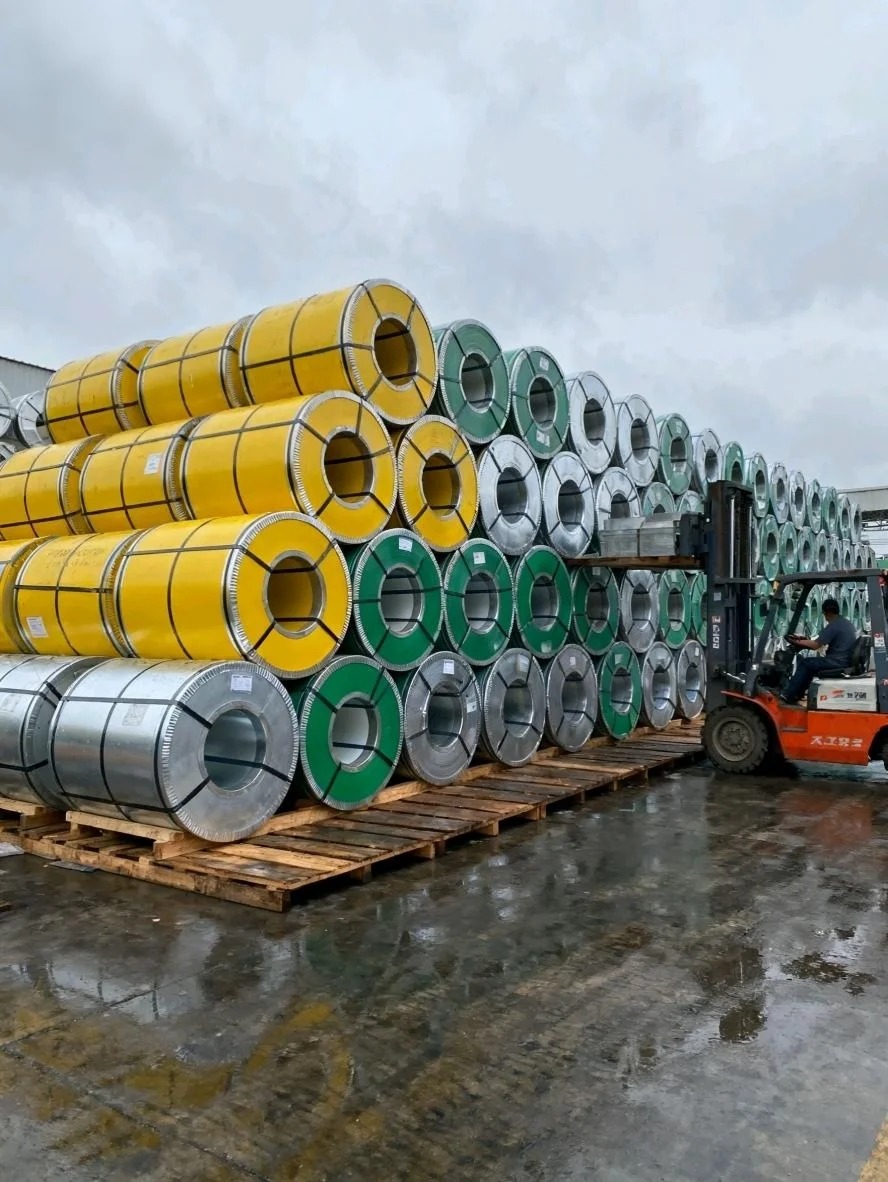
- Galvanized sheet and coil (GI steel)
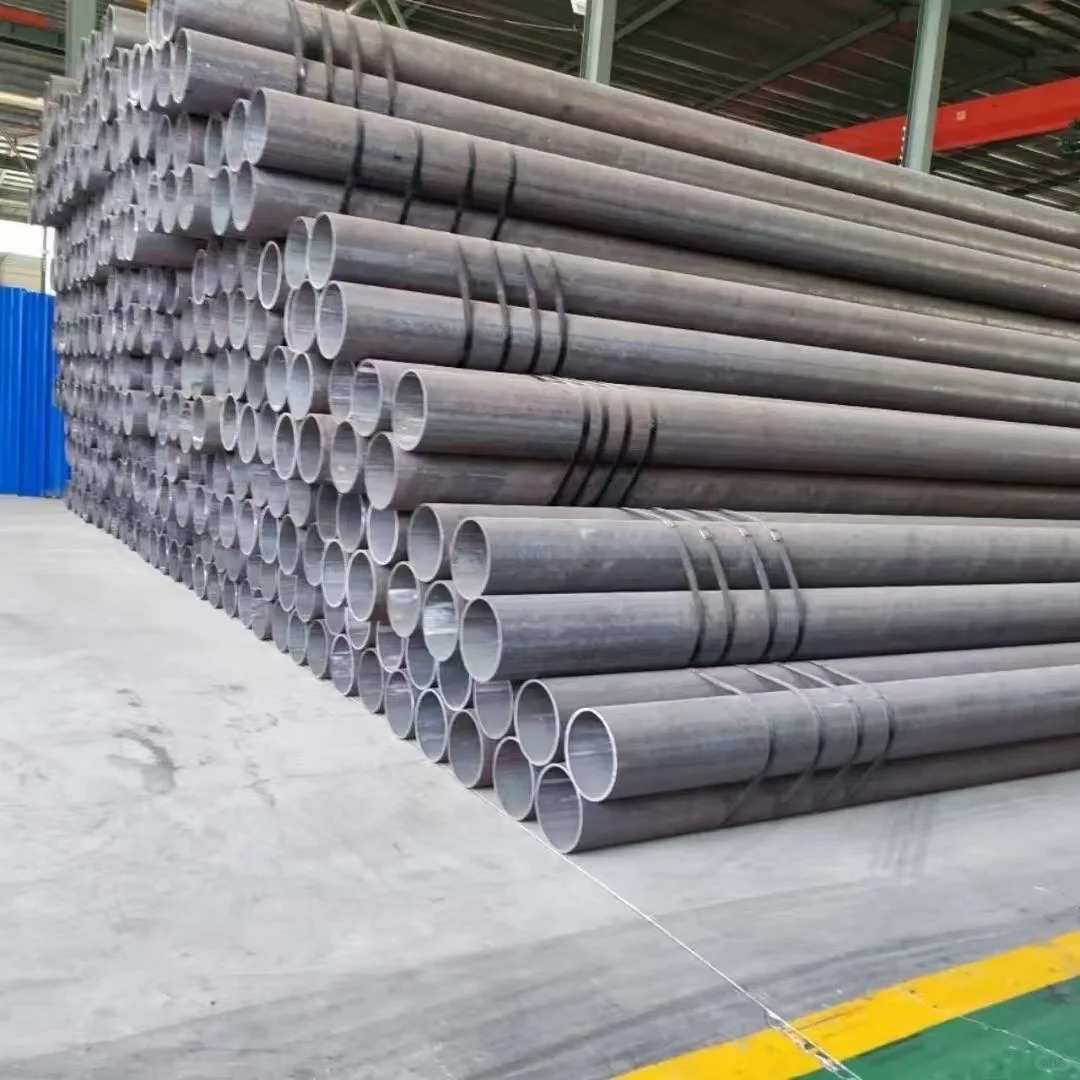
- Galvanized pipe and tube
- Structural steel beams, angles, channels
- Fencing, guardrails, utility poles
- Nails, bolts, and fasteners
- Automotive underbodies
2. Electro-Galvanizing (EG / Electroplating)
Process: Zinc is deposited onto the steel surface using electrical current in a zinc electrolyte solution.
Key features:
- Very smooth, uniform, thin zinc coating
- Thinner coating than HDG (typically 10–40 g/m²)
- Excellent surface quality — ideal for painting
- More precise coating thickness control
- More expensive per unit of zinc
- Less corrosion protection than HDG (thinner coating)
Applications:
- Automotive body panels (paint base)
- Appliances
- Furniture
- Electronic enclosures
- Products requiring a smooth, uniform surface
3. Galvanneal (GA)
Process: After hot-dip galvanizing, the steel is immediately reheated to cause the zinc to diffuse into the steel, forming a zinc-iron alloy layer.
Key features:
- Matte gray, non-spangled surface
- Excellent paint adhesion
- Good spot weldability
- Harder, more scratch-resistant than pure zinc
- Slightly lower corrosion resistance than pure zinc HDG
Applications:
- Automotive body panels (painted)
- Appliances
- Office furniture
- Products that will be painted
4. Continuous vs Batch Galvanizing
- Continuous galvanizing: Steel coil passes continuously through molten zinc. Used for sheet, coil, and pipe. High volume, consistent quality.
- Batch (hot-dip) galvanizing: Pre-fabricated parts (beams, frames, assemblies) are dipped individually. Used for structural steel, fabricated parts. Coating thickness varies with steel thickness.
Hot-Dip Galvanizing Coating Structure
When steel is hot-dip galvanized, several distinct layers form:
| Layer | Composition | Characteristics |
|---|---|---|
| Eta layer (outermost) | Pure zinc (99% Zn) | Soft, ductile, shiny, provides sacrificial protection |
| Zeta layer | ~94% Zn, 6% Fe | Hard, somewhat brittle |
| Delta layer | ~90% Zn, 10% Fe | Very hard, wear-resistant |
| Gamma layer | ~75% Zn, 25% Fe | Hard, brittle, adjacent to steel |
| Base steel | Steel | The base material |
Total coating thickness for sheet: typically 10–30 microns (85–200 g/m²). For structural steel: 60–150+ microns.
Coating Weight and Thickness
Galvanized coating is specified by coating weight (grams per square meter, g/m²) or thickness (microns, µm).
Common GI Sheet Coating Designations:
| Coating Weight | Approx. Thickness (per side) | Typical Use |
|---|---|---|
| Z60 (60 g/m²) | ~8 µm | Light indoor use, furniture |
| Z80 (80 g/m²) | ~11 µm | General indoor, appliances |
| Z100 (100 g/m²) | ~14 µm | General purpose |
| Z120 (120 g/m²) | ~17 µm | Good outdoor use |
| Z180 (180 g/m²) | ~25 µm | Heavy outdoor, coastal |
| Z275 (275 g/m²) | ~38 µm | Severe environments, longest life |
| Z350 (350 g/m²) | ~49 µm | Maximum corrosion protection |
1 µm ≈ 7.1 g/m² (approximate conversion for pure zinc)
Expected Service Life
The service life of galvanized steel depends heavily on the environment:
| Environment | Z100 (100 g/m²) | Z275 (275 g/m²) |
|---|---|---|
| Rural / inland | 25–40 years | 50–70+ years |
| Urban / suburban | 15–25 years | 30–50 years |
| Industrial / polluted | 10–15 years | 20–30 years |
| Coastal (1–5 km) | 5–10 years | 10–20 years |
| Severe marine (<1 km) | 2–5 years | 5–10 years |
| Tropical / high humidity | 5–10 years | 10–20 years |
Note: These are rough estimates for general guidance. Actual service life depends on many factors including coating quality, steel thickness, installation quality, and maintenance.
Advantages of Galvanized Steel
1. Excellent Corrosion Protection
Galvanizing provides 10–50+ years of protection depending on environment — far longer than bare steel.
2. Sacrificial Protection
Unlike paint, if the coating gets scratched or damaged, the zinc continues to protect the exposed steel. This is the galvanizing advantage that no other coating can match.
3. Lowest Life-Cycle Cost
For most outdoor applications, galvanizing provides the best value per year of protection. While initial cost is higher than paint, maintenance costs are much lower.
4. Complete Coverage
Hot-dip galvanizing coats every surface — inside, outside, corners, edges, even the inside of hollow sections (if properly vented). Paint often misses edges and interior surfaces.
5. Instant Protection
The zinc coating provides full corrosion protection immediately — no curing time, no drying time.
6. Easy to Inspect
The coating quality can be visually inspected, and thickness can be easily measured with a magnetic thickness gauge.
7. Wide Availability
Galvanized steel is one of the most commonly available steel products worldwide, in all forms: sheet, coil, pipe, tube, profiles, wire.
Limitations of Galvanized Steel
1. Not Suitable for Extreme Environments
In severe coastal or industrial environments, even heavy galvanizing will eventually corrode. For these conditions, consider stainless steel or paint systems over galvanized.
2. White Rust
Galvanized steel stored in damp, poorly ventilated conditions can develop white rust (zinc hydroxide / zinc oxide). This is a superficial corrosion product that can usually be cleaned off but affects appearance.
3. Welding Issues
- Welding galvanized steel produces zinc fumes that are toxic and require proper ventilation
- The weld area loses zinc protection and should be touched up with zinc-rich paint
- Weld spatter can damage the coating
4. Not Compatible with Certain Materials
Galvanized steel should not be in direct contact with copper, brass, or lead in wet environments — this can cause accelerated corrosion of the zinc (galvanic corrosion).
5. Appearance Limitations
The spangled (crystalline) surface may not be desirable for decorative applications. Paint or powder coat can be applied over galvanized for a better finish.
6. Not Food Safe for Direct Contact
Zinc can leach into food or water, especially acidic foods. For food contact, use food-grade epoxy coatings or stainless steel instead.
Galvanized vs Stainless Steel
| Feature | Galvanized Steel | Stainless Steel (304) |
|---|---|---|
| Base material | Carbon steel + zinc coating | Chromium-nickel alloy steel |
| Corrosion resistance | Good (10–50 years) | Excellent (50–100+ years) |
| Cost | 1x (low) | 3–5x (high) |
| Self-healing | Yes (sacrificial zinc) | Yes (passive oxide layer) |
| Appearance | Matte gray / spangled | Bright silver |
| Scratch resistance | Good — zinc sacrificial | Fair — scratches can show corrosion |
| Weldability | Good (fume control needed) | Excellent |
| Food contact | Generally no | Yes (FDA approved) |
| Strength | High (carbon steel base) | Good (austenitic stainless) |
| Maintenance | Low | Very low |
Choose galvanized if:
- Budget is tight
- Good, not premium, corrosion resistance is enough
- Structural strength is important
- Low life-cycle cost matters
Choose stainless if:
- Premium corrosion resistance is required
- Appearance matters
- Food or pharmaceutical contact
- Zero maintenance desired
- Very long service life (50+ years)
How to Specify Galvanized Steel
When ordering galvanized steel, specify:
- Base steel grade (e.g., Q235B, S235JR, DC01)
- Galvanizing method (hot-dip / electro / galvanneal)
- Coating weight (e.g., Z100, Z275 / G60, G90)
- Product form (sheet, coil, pipe, tube, etc.)
- Dimensions (thickness, width, length, diameter)
- Surface (regular spangle, minimum spangle, zero spangle)
- Standard (e.g., EN 10346, ASTM A653, GB/T 2518)
- Quantity
Common Galvanized Steel Products
| Product | Typical Use |
|---|---|
| Galvanized sheet / coil (GI) | Roofing, wall panels, ductwork, appliances |
| Galvanized pipe (GI pipe) | Water pipe, fencing, scaffolding, structures |
| Galvanized tube / hollow section | Structures, furniture, handrails |
| Galvanized H-beam / I-beam | Structural steel (hot-dip after fabrication) |
| Galvanized angle / channel | Brackets, supports, frames |
| Galvanized wire | Fencing, wire mesh, cable |
| Galvanized fasteners | Bolts, nuts, nails, screws |
| Galvanized corrugated sheet | Roofing, siding, fencing |
Maintenance and Care
Galvanized steel is low-maintenance but not no-maintenance:
- Keep it clean: Regular rinsing with fresh water extends life, especially in coastal areas
- Avoid contact with incompatible metals: Use insulation between galvanized steel and copper/brass
- Touch up damaged areas: Use zinc-rich paint for coating damage
- Proper storage: Store in well-ventilated areas to prevent white rust
- Inspect periodically: Check for corrosion, especially at welds and connections
Conclusion
Galvanized steel is the workhorse of corrosion protection — economical, reliable, and available in every steel product form. For most outdoor and moderately corrosive applications, it offers the best balance of corrosion protection and cost.
At {{ .Site.Params.companyShortName }}, we supply galvanized steel in all forms — sheet, coil, pipe, tube, profiles, and wire — with various coating weights and surface finishes. Contact us for a competitive quote on your galvanized steel requirements.
Explore Related Products
Frequently Asked Questions
How long does galvanized steel last?
Galvanized steel service life depends on the environment and coating thickness. In rural/inland areas, Z275 galvanized steel can last 50-70+ years. In urban/suburban environments, expect 30-50 years. In coastal or industrial areas, 10-20 years is more typical.
What is hot-dip galvanizing?
Hot-dip galvanizing (HDG) is the process of dipping steel into a bath of molten zinc at about 450°C. The zinc metallurgically bonds to the steel, creating a durable zinc coating that provides both barrier protection and sacrificial cathodic protection against corrosion.
Is galvanized steel rust proof?
No, galvanized steel is not rust-proof — it's rust-resistant. The zinc coating slows down corrosion significantly, but it will eventually corrode, especially in harsh environments. The zinc sacrifices itself to protect the steel, which is why thicker coatings last longer.
Can galvanized steel be welded?
Yes, galvanized steel can be welded, but special precautions are needed. Welding produces zinc fumes that are toxic — always ensure proper ventilation. The weld area loses zinc protection and should be touched up with zinc-rich paint or compound to restore corrosion protection.
What's the difference between galvanized and stainless steel?
Galvanized steel is carbon steel coated with zinc for corrosion protection. Stainless steel is an alloy containing at least 10.5% chromium that is inherently corrosion-resistant throughout the material. Stainless steel costs 3-5x more but lasts much longer and has a more attractive appearance.
What is white rust on galvanized steel?
White rust is a white, powdery corrosion product (zinc hydroxide / zinc oxide) that forms on galvanized steel when it's exposed to moisture without access to air, such as when stored wet in tightly stacked bundles. It's usually superficial and can be cleaned off, but it affects appearance and reduces the effective coating life.
Looking for a Reliable Steel Supplier?
Rubao-Chinasteel supplies high-quality steel products at factory-direct prices. MOQ from 1 ton · ISO certified · Fast global delivery.