
Carbon Steel Grades: A Complete Guide (A36, Q235B, Q355B, S235JR & More)
Complete guide to carbon steel grades — low carbon, medium carbon, high carbon, and alloy steels. Understand A36, Q235B, Q355B, S235JR and more.
What is Carbon Steel?
Carbon steel is the most widely used type of steel, accounting for approximately 90% of global steel production. It’s an alloy of iron and carbon (with manganese and trace impurities), where carbon is the primary alloying element that determines strength and hardness.
Carbon steel is valued for its:
- Low cost and wide availability
- Excellent weldability and machinability
- Good strength and ductility
- Versatility across thousands of applications
This guide covers the most common carbon and low-alloy structural steel grades you’ll encounter in international trade.
How Carbon Steel is Classified
Carbon steels are generally classified by their carbon content:
| Category | Carbon Content | Characteristics |
|---|---|---|
| Low Carbon Steel (Mild Steel) | 0.05 – 0.30% | Most common. Excellent formability, weldability, ductility. Low strength. |
| Medium Carbon Steel | 0.30 – 0.60% | Higher strength, good balance of properties. Used for components and machinery. |
| High Carbon Steel | 0.60 – 1.00%+ | Very hard and strong, but brittle. Used for tools, springs, wires. |
Most structural and general-purpose steel falls into the low carbon (mild steel) category.
Most Common Structural Carbon Steel Grades
1. ASTM A36 (United States)
A36 is the standard structural carbon steel in North America. The “36” refers to its minimum yield strength of 36,000 psi (250 MPa).
- Standard: ASTM A36/A36M
- Carbon: ≤ 0.29% (≤100mm thick)
- Yield Strength: 250 MPa (36 ksi) for ≤50mm
- Tensile Strength: 400–550 MPa (58–80 ksi)
- Elongation: 20%
- Key Features: Excellent weldability, ductile, widely available
- Applications: Buildings, bridges, platework, machinery, general fabrication
2. GB Q235B (China)
Q235B is the most common structural steel in China and much of Asia. Q = yield strength, 235 = 235 MPa, B = quality grade B (impact tested at +20°C).
- Standard: GB/T 700 / GB/T 3274
- Carbon: ≤ 0.20% (≤16mm thick)
- Yield Strength: 235 MPa for ≤16mm
- Tensile Strength: 375–500 MPa
- Elongation: 26%
- Key Features: Lowest cost structural grade, excellent formability, abundant supply
- Applications: General structures, profiles, pipes, sheet metal, non-critical components
Near-equivalent to: ASTM A36, EN S235JR
3. GB Q355B (China)
Q355B (formerly Q345B) is China’s standard low-alloy high-strength structural steel. It achieves higher strength through manganese and microalloying elements (V, Nb, Ti).
- Standard: GB/T 1591-2018
- Carbon: ≤ 0.24%
- Yield Strength: 355 MPa for ≤16mm
- Tensile Strength: 470–630 MPa
- Elongation: 21%
- Key Features: 50% stronger than Q235B, good weldability, multiple quality levels (B/C/D/E)
- Applications: Heavy structures, bridges, cranes, pressure vessels, wind towers
Near-equivalent to: ASTM A572 Grade 50, EN S355JR
4. EN S235JR (Europe)
S235JR is Europe’s standard mild structural steel. S = structural, 235 = 235 MPa yield, JR = 27J impact at room temperature.
- Standard: EN 10025-2
- Carbon: ≤ 0.17–0.20% (depends on thickness)
- Yield Strength: 235 MPa for ≤16mm
- Tensile Strength: 360–510 MPa
- Elongation: 26%
- Impact: 27 J at +20°C
- Key Features: European standard, certified impact resistance, good weldability
- Applications: Building structures, machinery, general engineering
Near-equivalent to: ASTM A36, GB Q235B
5. EN S355JR (Europe)
S355JR is Europe’s standard high-strength structural steel. Available in JR/J0/J2/K2/NL quality levels for different temperature toughness.
- Standard: EN 10025-2 / -3
- Carbon: ≤ 0.24%
- Yield Strength: 355 MPa for ≤16mm
- Tensile Strength: 470–630 MPa
- Elongation: 21%
- Impact: 27 J at +20°C
- Key Features: High strength, multiple quality options, widely specified in Europe
- Applications: Heavy construction, bridges, offshore, lifting equipment
Near-equivalent to: ASTM A572 Grade 50, GB Q355B
6. ASTM A572 Grade 50 (United States)
A572 Grade 50 is a high-strength low-alloy (HSLA) structural steel widely used in North America.
- Standard: ASTM A572/A572M
- Yield Strength: 345 MPa (50 ksi)
- Tensile Strength: 450–600 MPa (65–87 ksi)
- Elongation: 18%
- Key Features: High strength-to-weight ratio, good formability
- Applications: Structural shapes, bridges, heavy equipment
Near-equivalent to: GB Q355B, EN S355JR
7. SS400 (Japan)
SS400 is Japan’s standard general-purpose structural steel (JIS G3101).
- Standard: JIS G3101
- Yield Strength: ≥ 245 MPa (for ≤16mm)
- Tensile Strength: 400–510 MPa
- Elongation: 21%+ (depending on thickness)
- Key Features: Japanese industrial standard, good general properties
- Applications: General structural use across Japanese and SE Asian markets
Near-equivalent to: ASTM A36, GB Q235B, EN S235JR
Quick Comparison Table
| Grade | Standard | Region | Yield Strength | Tensile Strength | Carbon (max) |
|---|---|---|---|---|---|
| Q235B | GB/T 700 | China | 235 MPa | 375–500 MPa | 0.20% |
| A36 | ASTM A36 | USA | 250 MPa | 400–550 MPa | 0.29% |
| S235JR | EN 10025 | Europe | 235 MPa | 360–510 MPa | 0.17–0.20% |
| SS400 | JIS G3101 | Japan | 245 MPa | 400–510 MPa | ~0.23% |
| Q355B | GB/T 1591 | China | 355 MPa | 470–630 MPa | 0.24% |
| A572 Gr.50 | ASTM A572 | USA | 345 MPa | 450–600 MPa | 0.23% |
| S355JR | EN 10025 | Europe | 355 MPa | 470–630 MPa | 0.24% |
Low Carbon vs High Strength: Which to Choose?
Choose Mild Steel (Q235B / A36 / S235JR) If:
- ✅ Cost is the primary concern
- ✅ Loads are moderate
- ✅ Excellent formability is needed (bending, stamping, deep drawing)
- ✅ Simple welding and fabrication
- ✅ Structure is non-critical or lightly loaded
- ✅ Maximum availability and shortest lead time
Choose High-Strength Low Alloy (Q355B / A572 Gr.50 / S355JR) If:
- ✅ Need to reduce weight and material usage
- ✅ Heavy loads or long spans
- ✅ Space-constrained designs
- ✅ Engineering specifications require it
- ✅ Life-cycle cost favors less material + higher grade
- ✅ Bridges, cranes, heavy machinery
The Cost / Weight Tradeoff
High-strength steel costs more per ton, but you use less of it:
| Scenario | Mild Steel | High-Strength Steel | Cost Saving? |
|---|---|---|---|
| Fixed load, can reduce section | 100% weight × 100% cost/ton | ~70% weight × 115% cost/ton | ✅ Yes (~20% less total cost) |
| Fixed thickness (stiffness governs) | 100% weight × 100% cost/ton | 100% weight × 115% cost/ton | ❌ No (more expensive) |
Rule of thumb: If strength is the limiting factor, high-strength steel usually saves money. If stiffness, corrosion allowance, or minimum thickness governs, mild steel is cheaper.
Pipe and Tube Grades
Carbon steel pipes have their own grade systems:
Seamless Pipes
- ASTM A106 Gr. B: Standard seamless carbon steel pipe for high-temperature service
- API 5L Grade B: Line pipe for oil and gas transmission
- GB 8163 20#: Chinese seamless steel pipe for fluid transport
- ASTM A53 Gr. B: Seamless and welded carbon steel pipe
Welded Pipes
- ASTM A53 Gr. B (ERW): Electric resistance welded pipe
- API 5L X42–X80: Higher strength line pipe grades
- GB/T 3091 Q235B/Q355B: Chinese welded steel pipe for general use
Galvanized Carbon Steel
Carbon steel is often hot-dip galvanized (HDG) for corrosion protection. Common galvanized grades:
- Q235B HDG: Most common in China — economical and widely available
- A36 HDG: Common in North America
- S235JR HDG: Common in Europe
Galvanizing typically adds 30–50% to the cost of carbon steel but provides 10–30 years of corrosion protection depending on environment.
How to Specify Carbon Steel Correctly
When ordering carbon steel, always specify:
- Grade and standard (e.g., “Q235B per GB/T 700” or “A36 per ASTM A36”)
- Product form (plate, sheet, coil, pipe, H-beam, angle, etc.)
- Dimensions (thickness, width, length, diameter, wall thickness)
- Surface condition (black, mill finish, galvanized, painted)
- Certification (MTC to EN 10204 3.1 or 3.2 as needed)
- Quantity (tons or pieces)
Common Carbon Steel Products
| Product Form | Typical Grades |
|---|---|
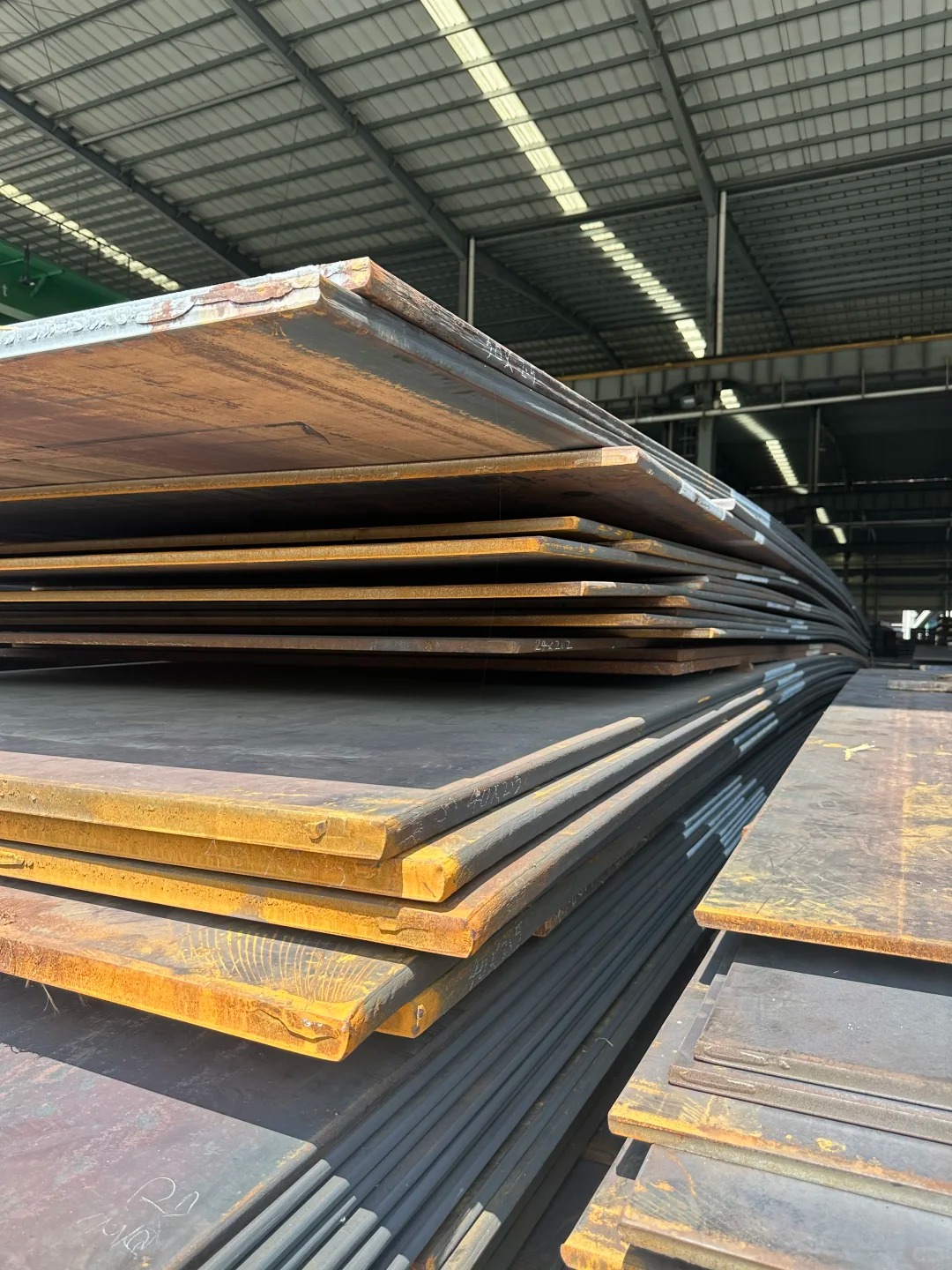
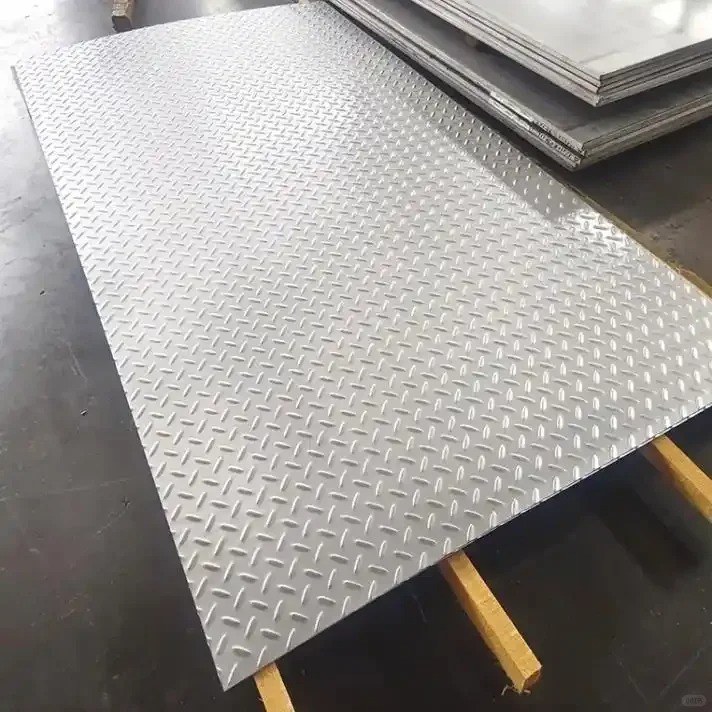
| Plate / Sheet / Coil | Q235B, Q355B, A36, S235JR, S355JR |
| H-beam / I-beam | Q235B, Q355B, A36, S235JR, S355JR |
| Angle / Channel / Flat bar | Q235B, Q355B, A36, S235JR |
| Seamless pipe | 20#, 45#, A106 Gr. B, API 5L |
| Welded pipe / ERW | Q235B, Q355B, A53 Gr. B |
| Galvanized steel | Q235B HDG, S235JR HDG, A36 HDG |
| Coil / strip | Q235B, Q355B, SPCC, DC01 |
Conclusion
Carbon steel is the foundation of modern industry — versatile, affordable, and available in grades optimized for every application. Understanding the different grades and their equivalents across standards is essential for international sourcing.
Key takeaways:
- Mild steel (Q235B / A36 / S235JR) is the economical choice for general structures
- High-strength steel (Q355B / A572 Gr.50 / S355JR) saves weight and often total cost for heavy-load applications
- Most grades are near-equivalent across standards — substitution is usually possible with engineering approval
- Galvanizing is the most cost-effective way to add corrosion protection
At {{ .Site.Params.companyShortName }}, we supply all common carbon steel grades in every product form. Contact us for a competitive quote — we can help you select the right grade for your application.
Explore Related Products
Frequently Asked Questions
What is the most common carbon steel grade?
The most common carbon steel grade varies by region: Q235B is most common in China, A36 in North America, and S235JR in Europe. All three are mild structural steels with similar properties and are often considered near-equivalent.
What's the difference between carbon steel and stainless steel?
Carbon steel contains primarily iron and carbon (up to ~1%) and will rust when exposed to moisture. Stainless steel contains at least 10.5% chromium, which forms a self-healing oxide layer that prevents rust. Stainless steel is 3-5x more expensive but far more corrosion-resistant.
Is Q235B the same as A36?
Q235B and A36 are near-equivalent but not identical. Both are mild carbon structural steels with similar yield strength (235 vs 250 MPa), good weldability, and comparable applications. They can often substitute for each other with engineering approval.
What does Q355B mean?
Q355B is a Chinese low-alloy high-strength structural steel: Q = yield strength (屈服), 355 = minimum 355 MPa yield, B = quality grade B (requires Charpy V-notch impact test at +20°C). It was formerly known as Q345B before the 2019 standard update.
Is carbon steel stronger than stainless steel?
It depends on the grade. Mild carbon steel (A36, Q235B) has lower strength than austenitic stainless steels like 304. However, high-strength carbon steels like Q355B (355 MPa yield) can be significantly stronger than 304 stainless (205 MPa yield).
How long does carbon steel last outdoors?
Unprotected carbon steel will rust relatively quickly outdoors — surface rust can form in days. However, with proper protection (paint, galvanizing, powder coating), service life can be 10-50+ years depending on the coating and environment.
Looking for a Reliable Steel Supplier?
Rubao-Chinasteel supplies high-quality steel products at factory-direct prices. MOQ from 1 ton · ISO certified · Fast global delivery.