
321 Stainless Steel: Titanium-Stabilized Grade for High Temperatures
Complete guide to 321 stainless steel - titanium-stabilized austenitic stainless steel with excellent resistance to sensitization and intergranular corrosion. Ideal for welding and high-temperature service.
What is 321 Stainless Steel?
321 stainless steel is a titanium-stabilized austenitic stainless steel that offers excellent resistance to sensitization (intergranular corrosion caused by carbide precipitation) during welding and high-temperature service. It’s essentially a 304-type stainless steel with the addition of titanium to stabilize the carbon and prevent chromium carbide formation at grain boundaries.
Sometimes called “stabilized 304”, Grade 321 was developed specifically for applications where components must be welded and can’t be post-weld annealed. The titanium addition “ties up” the carbon, forming titanium carbides instead of chromium carbides, thus preserving the chromium content at the grain boundaries and maintaining corrosion resistance.
321 also offers good high-temperature properties, with better creep resistance and higher temperature service capability than standard 304. It’s widely used in the chemical, petroleum, aerospace, and power generation industries for welded components and elevated-temperature service.
Chemical Composition
The chemical composition of 321 stainless steel (UNS S32100 / EN 1.4541) is:
| Element | Composition (%) |
|---|---|
| Chromium (Cr) | 17.0 - 19.0 |
| Nickel (Ni) | 9.0 - 12.0 |
| Titanium (Ti) | >= 5 x C%, <= 0.70 |
| Carbon (C) | <= 0.08 |
| Manganese (Mn) | <= 2.00 |
| Silicon (Si) | <= 1.00 |
| Phosphorus (P) | <= 0.045 |
| Sulfur (S) | <= 0.030 |
| Iron (Fe) | Balance |
The Stabilization Effect: Why Titanium Matters
To understand why 321 is special, you first need to understand sensitization:
When regular 304 stainless steel is heated to 425-870 deg C (800-1600 deg F), carbon in the steel combines with chromium to form chromium carbides that precipitate at the grain boundaries. This depletes chromium from the areas adjacent to the boundaries, making them vulnerable to corrosion. This phenomenon is called intergranular corrosion (IGC).
321 solves this problem by adding titanium, which has a very strong affinity for carbon. Titanium forms titanium carbides (TiC) instead of chromium carbides. Since titanium doesn’t contribute to corrosion resistance, using it to “tie up” carbon preserves the chromium at the grain boundaries.
The titanium content is specified as at least 5 times the carbon content (5 x C%) to ensure there’s enough titanium to combine with all available carbon.
Mechanical Properties
| Property | Value (annealed, room temp) |
|---|---|
| Tensile Strength | >= 515 MPa (75,000 psi) |
| Yield Strength (0.2% offset) | >= 205 MPa (30,000 psi) |
| Elongation (in 2") | >= 40% |
| Hardness (Rockwell B) | <= 95 HRB |
| Elastic Modulus | 193 GPa (28 x 10^6 psi) |
| Density | 7.93 g/cm3 (0.289 lb/in3) |
| Melting Range | 1400 - 1455 deg C (2550 - 2650 deg F) |
At room temperature, 321 has essentially the same mechanical properties as 304. The difference becomes apparent at elevated temperatures and in the as-welded condition.
High-Temperature Properties
321 has better high-temperature properties than 304:
| Temperature (deg C) | Tensile Strength (MPa, approx.) |
|---|---|
| 20 | 515 |
| 300 | 415 |
| 500 | 330 |
| 650 | 205 |
| 800 | 110 |
321 can be used continuously up to about 870 deg C (1600 deg F) in oxidizing environments, and up to 925 deg C (1700 deg F) intermittently. Its creep strength is notably better than 304 and slightly better than 316 at temperatures above 600 deg C.
Key Features & Benefits
1. Immunity to Sensitization
This is 321’s defining characteristic. The titanium stabilization prevents chromium carbide precipitation during exposure to the 425-870 deg C temperature range, so the material retains its full corrosion resistance even after:
- Welding (no post-weld annealing needed)
- High-temperature service
- Slow cooling through the critical temperature range
- Multiple thermal cycles
This makes 321 indispensable for fabricated structures and welded assemblies that cannot be solution-annealed after manufacturing.
2. Excellent Corrosion Resistance
321 has corrosion resistance comparable to standard 304 in most environments when properly solution-annealed. However, unlike 304, it maintains this corrosion resistance after welding or thermal cycling. It’s resistant to:
- Atmospheric corrosion
- Fresh water and many chemical solutions
- Oxidizing acids like nitric acid
- Food processing environments
- Most organic compounds
3. Good High-Temperature Strength and Oxidation Resistance
While not as capable as 310S for extremely high temperatures, 321 offers:
- Good oxidation resistance to 870-925 deg C (1600-1700 deg F)
- Better creep resistance than 304
- Good high-temperature tensile and yield strength
- Stable performance during thermal cycling
The titanium carbides also help pin grain boundaries at high temperatures, improving creep strength.
4. Excellent Weldability
321 can be welded by all common methods (TIG, MIG, SMAW, SAW, resistance welding). The key advantage is that the weld zone and heat-affected zone remain corrosion-resistant without post-weld annealing.
For most applications, 347 (niobium-stabilized) or 308L filler metal can be used. For maximum corrosion resistance, matching 321 filler is recommended.
5. Non-Magnetic (Annealed)
Like 304, 321 is essentially non-magnetic in the fully annealed condition. Cold working or welding can introduce some magnetic response due to martensite formation, but it remains much less magnetic than ferritic or martensitic grades.
6. Good Formability and Ductility
321 has good formability, similar to 304. It can be deep drawn, bent, roll-formed, and fabricated using standard stainless steel tooling and techniques. Like other austenitic grades, it work-hardens and may require intermediate annealing for severe forming operations.
Common Applications
321 stainless steel is used across many industries, particularly where welding and high-temperature service are involved:
Chemical Processing:
- Welded process piping and vessels
- Heat exchangers and condensers
- Reactor components
- Distillation columns
- Storage tanks (welded construction)
- Piping systems for nitric acid
Petroleum & Refining:
- Refinery piping and vessels
- Catalytic crackers and reformers
- Hydrogen processing equipment
- Furnace components
- Heat exchanger tubes and shells
Power Generation:
- Boiler superheater tubes
- Expansion joints
- Steam piping
- Flue gas desulfurization systems
- Nuclear power plant components
Aerospace:
- Aircraft exhaust systems
- Engine manifolds and ducts
- Structural components
- Fasteners and fittings
- Heat shields
Automotive:
- Exhaust manifolds and headers
- Catalytic converter components
- EGR (exhaust gas recirculation) systems
- Turbocharger housings
Food Processing:
- Welded equipment and piping
- Brewery and winery equipment
- Dairy processing equipment
- Cookware and food contact surfaces (where welding is needed)
General Industry:
- Welded architectural structures
- Expansion joints and bellows
- Furnace parts (moderate temperature)
- Pharmaceutical equipment
- Paper and pulp processing equipment
321 vs 304 vs 316L - Comparison
| Property | 321 | 304 | 316L |
|---|---|---|---|
| Chromium | 17-19% | 18-20% | 16-18.5% |
| Nickel | 9-12% | 8-10.5% | 10-14% |
| Molybdenum | 0% | 0% | 2-3% |
| Stabilizer | Titanium | None | None |
| Carbon | <= 0.08% | <= 0.08% | <= 0.03% |
| Corrosion Resistance | Good (like 304) | Good | Excellent |
| Sensitization Resistance | Excellent | Poor | Good |
| Weld Corrosion Resistance | Excellent | Poor | Good |
| Max. Service Temp | 925 deg C (1700 deg F) | 870 deg C (1600 deg F) | 870 deg C (1600 deg F) |
| Creep Strength | Good | Fair | Good |
| Cost | Higher than 304 | Moderate | High |
| Post-weld Anneal Needed? | No | Yes | Generally no |
| UNS | S32100 | S30400 | S31603 |
When to Choose 321
Choose 321 when:
- Components will be welded and can’t be post-weld annealed
- The application involves service in the 425-870 deg C temperature range
- Intergranular corrosion is a concern
- You need good high-temperature creep strength
- The project involves thick sections where full annealing after welding is impractical
Choose 304 when:
- Welding is minimal or parts can be post-weld annealed
- Cost is the primary driver
- The application is at or near room temperature
Choose 316L when:
- Maximum aqueous corrosion resistance (especially chlorides) is needed
- The environment involves pitting or crevice corrosion
- Marine or coastal exposure is expected
- Low carbon content is needed for weldability (316L is an alternative to 321 for welded aqueous service)
Surface Finishes and Available Forms
321 is available in a wide range of product forms:
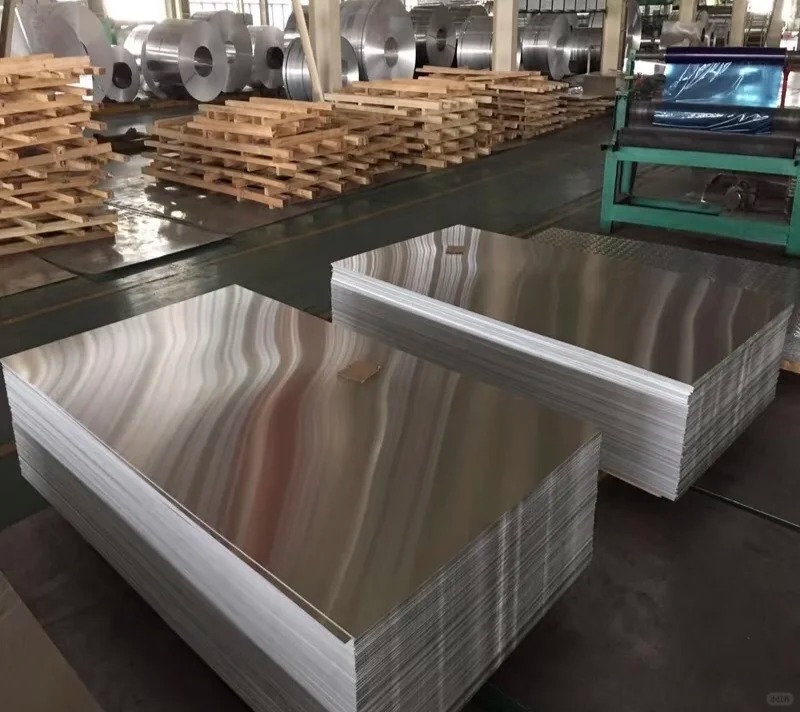
- Sheet & Plate - No.1 (HRAP), 2B, No.4, and other finishes
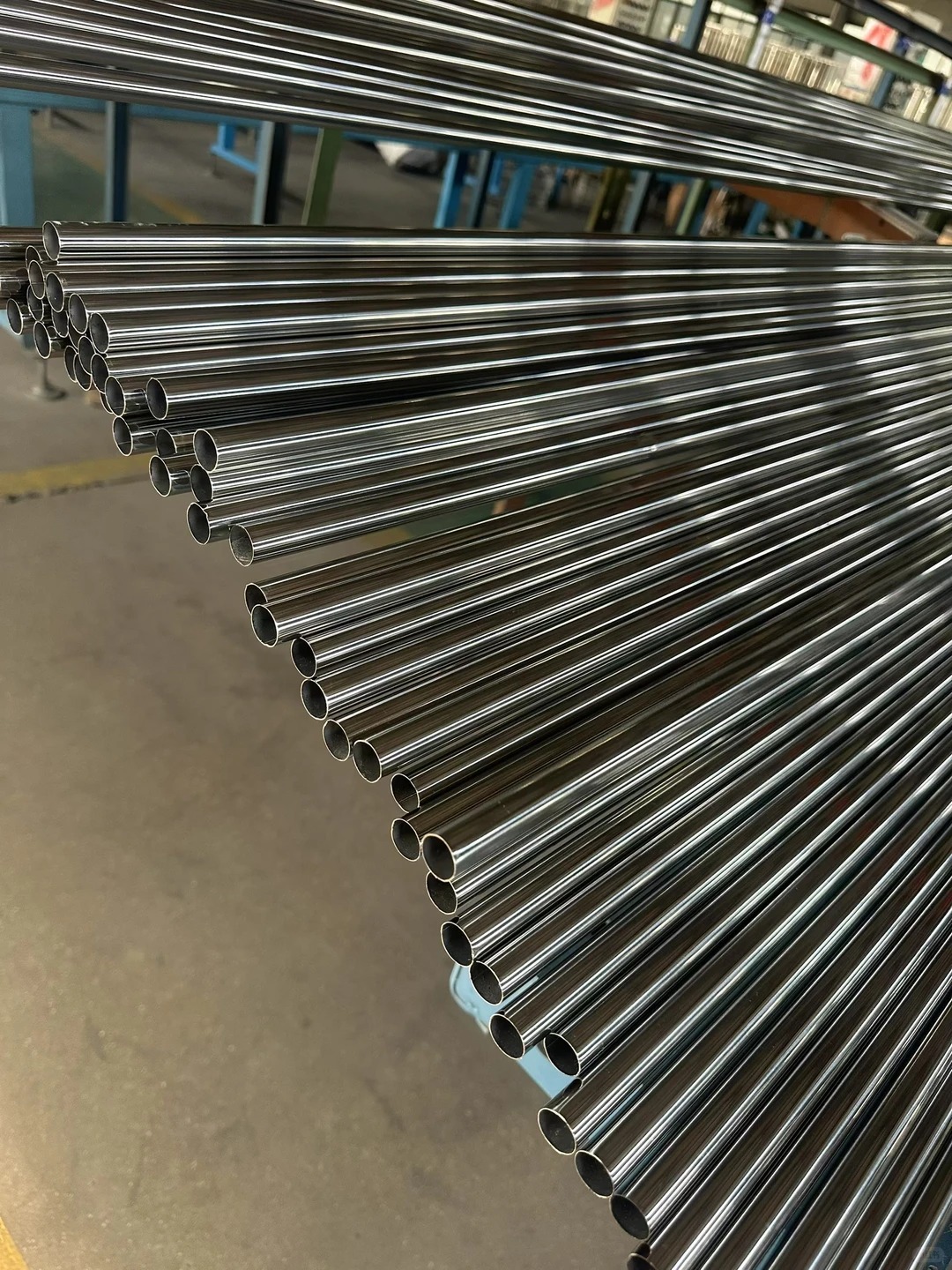
- Pipe & Tube - seamless and welded
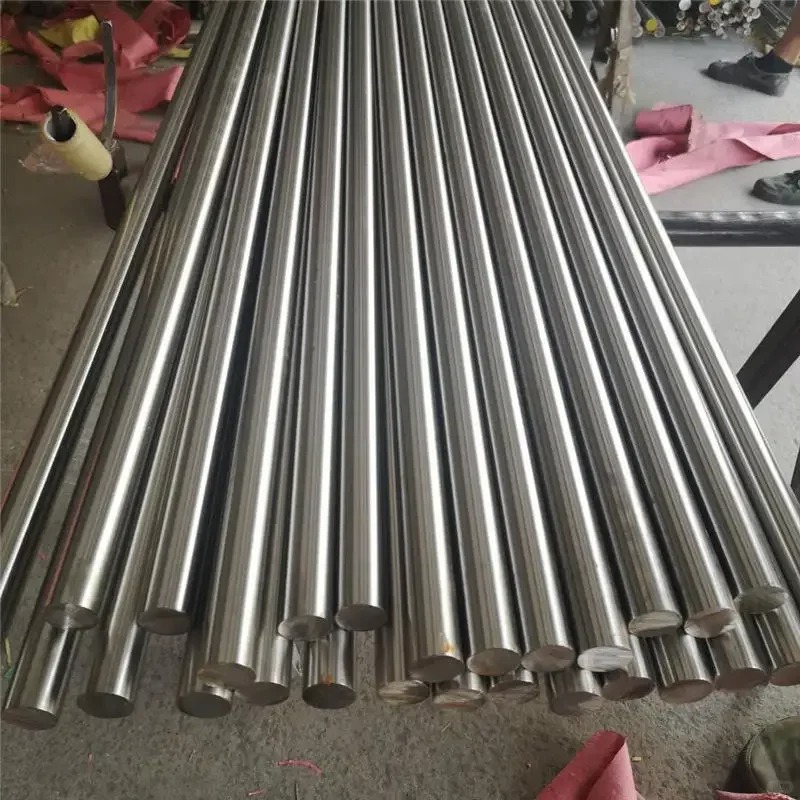
- Bar & Rod - round, flat, square
- Wire - for welding and weaving
- Fittings - elbows, tees, reducers, flanges
- Forgings - custom shapes and sizes
Standard surface finishes:
- No.1 (Hot Rolled Annealed & Pickled) - Most common for plate and heavy gauge
- 2B - Cold rolled, bright, for sheet and thin plate
- No.4 (Brushed) - Directional satin finish
- Pickled & Annealed (P&A) - Standard for tubing
Fabrication Considerations
Welding
Weldability is excellent and is the primary reason for choosing 321. No post-weld annealing is required to maintain corrosion resistance. Use 321 or 347 (niobium-stabilized) filler metal for best results. Preheat is generally not required. For very thick sections, a low preheat (100-150 deg C) may be used to prevent cracking.
Forming
321 forms similarly to 304. It can be deep drawn, bent, roll formed, and spun. It work-hardens at a similar rate to 304. For severe forming, intermediate annealing may be necessary. Forming equipment and tooling designed for 304 works well for 321.
Machining
Machinability is similar to 304 - the material is “gummy” and work-hardens quickly. Use sharp tools, rigid setups, slower speeds, and heavier feeds. Sulphurized or free-machining variants are not common for 321.
Heat Treatment
- Solution annealing: 1010-1120 deg C (1850-2050 deg F), air or water quench. Dissolves carbides and restores full corrosion resistance.
- Stabilizing annealing: 870-900 deg C (1600-1650 deg F), air cool. Precipitates titanium carbides, further improving intergranular corrosion resistance.
- 321 cannot be hardened by heat treatment (only by cold working).
Explore Related Products
Frequently Asked Questions
What is 321 stainless steel used for?
321 stainless steel is primarily used in applications where welding is required and post-weld annealing isn't practical, or where service temperatures fall in the 425-870 deg C sensitization range. Common uses include: welded process piping and vessels, heat exchangers, chemical processing equipment, petroleum refining components, boiler superheater tubes, aircraft exhaust systems, automotive exhaust manifolds, expansion joints, and welded architectural structures. It's the go-to stabilized grade when you need 304-type corrosion resistance after welding.
What does 'stabilized' mean in stainless steel?
'Stabilized' stainless steel contains elements like titanium (in 321) or niobium (in 347) that have a stronger affinity for carbon than chromium does. These elements form their own carbides (titanium carbide, niobium carbide) instead of allowing chromium carbides to form at grain boundaries. This prevents 'sensitization' - the loss of corrosion resistance at grain boundaries that occurs when regular stainless steel is heated to 425-870 deg C. Stabilized grades maintain their full corrosion resistance even after welding or high-temperature service.
What is the difference between 304 and 321 stainless steel?
321 is essentially 304 stainless steel with titanium added (at least 5x the carbon content). The base composition is similar (18% chromium, 10% nickel), and room temperature mechanical properties are nearly identical. The key difference is corrosion resistance after welding or heating: 321 stays corrosion-resistant because titanium prevents chromium carbide precipitation, while 304 can become sensitized and susceptible to intergranular corrosion. 321 also has slightly better high-temperature creep strength and oxidation resistance. 321 is more expensive than 304 due to the titanium addition.
Is 321 stainless steel magnetic?
In the fully annealed condition, 321 stainless steel is essentially non-magnetic - just like 304. It has an austenitic crystal structure which is non-magnetic at room temperature. However, cold working (bending, drawing, etc.) can induce some martensite formation, making it slightly magnetic. Welding can also introduce small amounts of magnetic delta-ferrite. But in general, 321 is considered a non-magnetic grade, especially when compared to ferritic grades like 430 which are strongly magnetic.
Can 321 stainless steel be welded?
Yes, and excellent weldability is actually one of the main reasons to choose 321. Unlike 304, which requires post-weld annealing to restore full corrosion resistance, 321 stays corrosion-resistant in the as-welded condition because the titanium stabilization prevents chromium carbide precipitation. All standard welding methods work well - TIG, MIG, SMAW, SAW, etc. Use 321 or 347 (niobium-stabilized) filler metal for the best results. Preheating is generally not required.
321 vs 316L: which is better for welded applications?
It depends on the corrosion environment. For high-temperature service and resistance to intergranular corrosion after welding, 321 is excellent. For aqueous corrosion, especially chloride pitting and crevice corrosion, 316L is superior because of its molybdenum content. 316L's low carbon also provides good resistance to sensitization, making it suitable for welded aqueous service. So: choose 321 for high-temperature welded applications, choose 316L for welded applications involving corrosive liquids or marine environments.
Looking for a Reliable Steel Supplier?
Rubao-Chinasteel supplies high-quality steel products at factory-direct prices. MOQ from 1 ton · ISO certified · Fast global delivery.