
2205 Duplex Stainless Steel: Properties, Strength & Applications
Complete guide to 2205 duplex stainless steel - the high-strength, corrosion-resistant 'super' stainless with a mixed austenitic-ferritic structure. Learn its advantages over 316L and ideal applications.
What is 2205 Duplex Stainless Steel?
2205 duplex stainless steel, also known as SAF 2205 or UNS S32205, is the most widely used grade of duplex stainless steel. It gets its name “duplex” because it has a two-phase microstructure consisting of approximately 50% austenite (face-centered cubic) and 50% ferrite (body-centered cubic).
This dual structure gives 2205 a unique combination of properties that neither austenitic nor ferritic stainless steels can achieve alone: much higher strength than 304 or 316, combined with excellent corrosion resistance - particularly against chloride-induced stress corrosion cracking (SCC) and pitting corrosion.
The “2205” designation refers to its approximate composition of 22% chromium and 5% nickel, though the actual formula also includes 3% molybdenum and nitrogen additions. The result is a material with:
- Nearly double the yield strength of 316L
- Superior pitting and crevice corrosion resistance to 316L
- Immunity to chloride stress corrosion cracking (which plagues austenitic grades)
- Only slightly lower ductility than austenitic grades
2205 has become the “workhorse” duplex grade, finding increasing use in chemical processing, oil & gas, marine, and desalination applications where both strength and corrosion resistance are required.
Chemical Composition
The chemical composition of 2205 duplex stainless steel (UNS S32205 / EN 1.4462) is:
| Element | Composition (%) |
|---|---|
| Chromium (Cr) | 21.0 - 23.0 |
| Molybdenum (Mo) | 2.5 - 3.5 |
| Nickel (Ni) | 4.5 - 6.5 |
| Nitrogen (N) | 0.08 - 0.20 |
| Carbon (C) | <= 0.030 |
| Manganese (Mn) | <= 2.00 |
| Silicon (Si) | <= 1.00 |
| Phosphorus (P) | <= 0.030 |
| Sulfur (S) | <= 0.020 |
| Iron (Fe) | Balance |
The Duplex Microstructure
The key to 2205’s performance is its balanced two-phase structure:
- Ferrite phase (BCC): Provides high strength, good resistance to stress corrosion cracking, and magnetic properties.
- Austenite phase (FCC): Provides ductility, toughness, and general corrosion resistance.
The roughly 50/50 balance gives the material the best of both worlds. The exact phase balance depends on heat treatment and composition - too high a ferrite content reduces toughness, while too high an austenite content reduces strength and SCC resistance.
Nitrogen is a particularly important alloying element in 2205 - it’s a strong austenite stabilizer, increases strength, and significantly improves pitting corrosion resistance.
Mechanical Properties
| Property | Value (annealed, room temp) |
|---|---|
| Tensile Strength (min) | 620 MPa (90,000 psi) |
| Yield Strength (0.2% offset, min) | 450 MPa (65,000 psi) |
| Elongation (in 2", min) | 25% |
| Hardness (typical) | 217 HB / ~95 HRB |
| Elastic Modulus | 200 GPa (29 x 10^6 psi) |
| Density | 7.82 g/cm3 (0.283 lb/in3) |
| Melting Range | 1370 - 1460 deg C (2500 - 2660 deg F) |
Strength Comparison
To put 2205’s strength in perspective:
| Grade | Yield Strength (MPa) | Tensile Strength (MPa) |
|---|---|---|
| 2205 Duplex | 450 | 620 |
| 316L | 170 | 485 |
| 304 | 205 | 515 |
| A36 Carbon Steel | 250 | 400 |
2205 has more than 2.5x the yield strength of 316L stainless steel and is even stronger than A36 carbon steel. This exceptional strength allows designers to use thinner material, saving weight and cost.
Key Features & Benefits
1. Very High Strength
This is the most obvious advantage. With a minimum yield strength of 450 MPa (65 ksi), 2205 is significantly stronger than both austenitic stainless steels and carbon steels. This translates to:
- Lighter structures (thinner sections needed)
- Lower material costs on a per-strength basis
- Higher pressure capacity in piping and vessels
- More compact designs
2. Excellent Corrosion Resistance
With 22% chromium, 3% molybdenum, and nitrogen addition, 2205 has excellent corrosion resistance:
Pitting Resistance Equivalent Number (PREN): ~34-36
- 316L PREN: ~24-26
- 304 PREN: ~19-20
Higher PREN = better pitting corrosion resistance.
2205 resists corrosion in:
- Chloride-containing environments (brine, seawater)
- Acidic solutions (sulfuric acid, phosphoric acid)
- Caustic solutions
- Marine and coastal environments
- Pulp and paper processing chemicals
3. Immunity to Chloride Stress Corrosion Cracking
This is a game-changer for many applications. Austenitic stainless steels like 304 and 316 are susceptible to stress corrosion cracking (SCC) in warm chloride environments - even at chloride levels too low to cause pitting. The ferritic phase in 2205 provides excellent SCC resistance.
Applications that cause 316L to fail by SCC (like hot chloride solutions) are often handled easily by 2205.
4. Good Ductility and Toughness
Despite its high strength and ferritic content, 2205 has surprisingly good ductility (25% elongation minimum) and toughness. It can be readily formed and fabricated, though not quite as easily as 304 or 316.
At temperatures below about -50 deg C, the ductile-to-brittle transition of the ferrite phase becomes a concern, so 2205 isn’t recommended for cryogenic service.
5. Good Fatigue and Fatigue Corrosion Resistance
The high strength of 2205 translates to excellent fatigue resistance. The combined high strength and corrosion resistance also give it good performance under fatigue-corrosion conditions - where cyclic loading and corrosion act together.
6. Cost-Effective for Demanding Applications
While 2205 is more expensive per kilogram than 316L, its higher strength means you need less material. For many structural and pressure applications, the weight savings more than offset the higher cost, resulting in a lower total part cost with better corrosion performance.
Common Applications
2205 is used in demanding environments where both strength and corrosion resistance matter:
Oil & Gas Industry:
- Offshore platforms and subsea equipment
- Pipelines and flowlines (sweet and sour service)
- Process piping and vessels
- Heat exchangers and coolers
- Valve and pump components
- Separators and treaters
Chemical Processing:
- Reactor vessels and columns
- Heat exchanger tubes and shells
- Storage tanks for corrosive chemicals
- Piping systems
- Pumps, valves, and fittings
- Evaporators and crystallizers
Desalination & Water Treatment:
- RO (reverse osmosis) plant components
- Seawater intake systems
- Heat exchanger tubes
- High-pressure piping
- Brine handling equipment
Marine & Shipbuilding:
- Ship hulls and structures
- Propellers and shafts
- Deck equipment and fittings
- Ballast water systems
- Offshore structures (oil platforms, wind turbine foundations)
Pulp & Paper:
- Digester components
- Bleach plant equipment
- Recovery boilers
- Piping and tanks
- Roll shells
Power Generation:
- Flue gas desulfurization (FGD) systems
- Cooling systems (seawater-cooled)
- Heat exchangers
- Condenser tubes and plates
General Industry:
- High-pressure storage tanks
- Pressure vessels
- Bridges and structural components (corrosive environments)
- Food processing (caustic cleaning, high-salt)
- Mining and mineral processing equipment
- Chemical tanker cargo tanks
2205 Duplex vs 316L - Side by Side Comparison
| Property | 2205 Duplex | 316L Austenitic |
|---|---|---|
| Structure | ~50% Austenite + 50% Ferrite | 100% Austenite |
| Chromium | 21-23% | 16-18.5% |
| Nickel | 4.5-6.5% | 10-14% |
| Molybdenum | 2.5-3.5% | 2-3% |
| Nitrogen | 0.08-0.20% | <= 0.10% |
| Yield Strength | 450 MPa (65 ksi) | 170 MPa (25 ksi) |
| Tensile Strength | 620 MPa (90 ksi) | 485 MPa (70 ksi) |
| Elongation | >= 25% | >= 40% |
| PREN (Pitting Resistance) | ~35 | ~25 |
| Chloride SCC Resistance | Excellent | Poor |
| General Corrosion Resistance | Very Good (better than 316L in many cases) | Good |
| Magnetic | Yes (moderately magnetic) | No (annealed) |
| Ductile-to-Brittle Transition | ~ -50 deg C | None (to cryogenic temps) |
| Formability | Good | Excellent |
| Weldability | Good (with care) | Excellent |
| Cost per kg | Higher than 316L | Lower than 2205 |
| Cost per strength unit | Lower | Higher |
| Density | 7.82 g/cm3 | 7.98 g/cm3 |
| UNS | S32205 | S31603 |
When to Choose 2205 Over 316L
Choose 2205 when:
- You need both high strength AND corrosion resistance
- Chloride stress corrosion cracking is a concern
- You’re dealing with high-pressure systems (strength matters)
- The application involves seawater, brine, or high chloride levels
- Weight savings are important (stronger = thinner material)
- Cost per unit strength is more important than cost per kilogram
Choose 316L when:
- Maximum formability or ductility is needed
- Cryogenic temperatures are involved
- Weldability without special procedures is critical
- The application is mainly for aesthetic or general corrosion service
- Lower initial material cost is the priority
Surface Finishes and Available Forms
2205 is available in a wide range of forms:
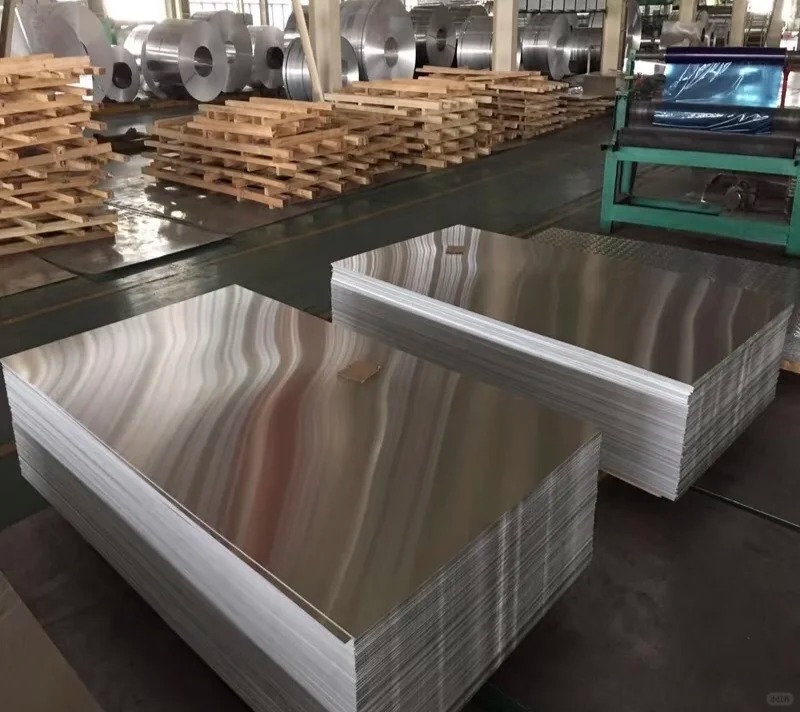
- Sheet & Plate - No.1 (HRAP), 2D, 2B, and polished finishes
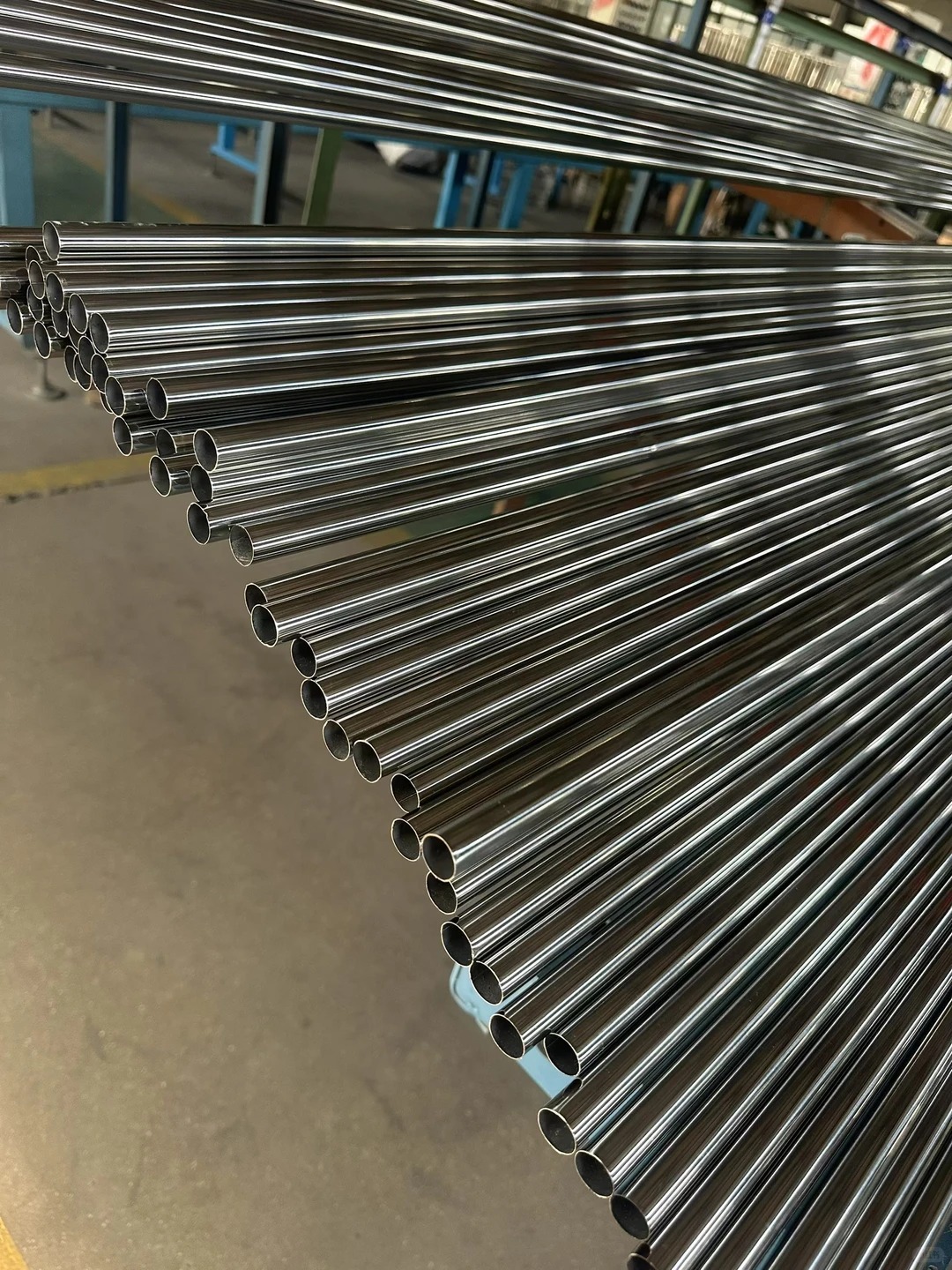
- Pipe & Tube - seamless and welded, all sizes
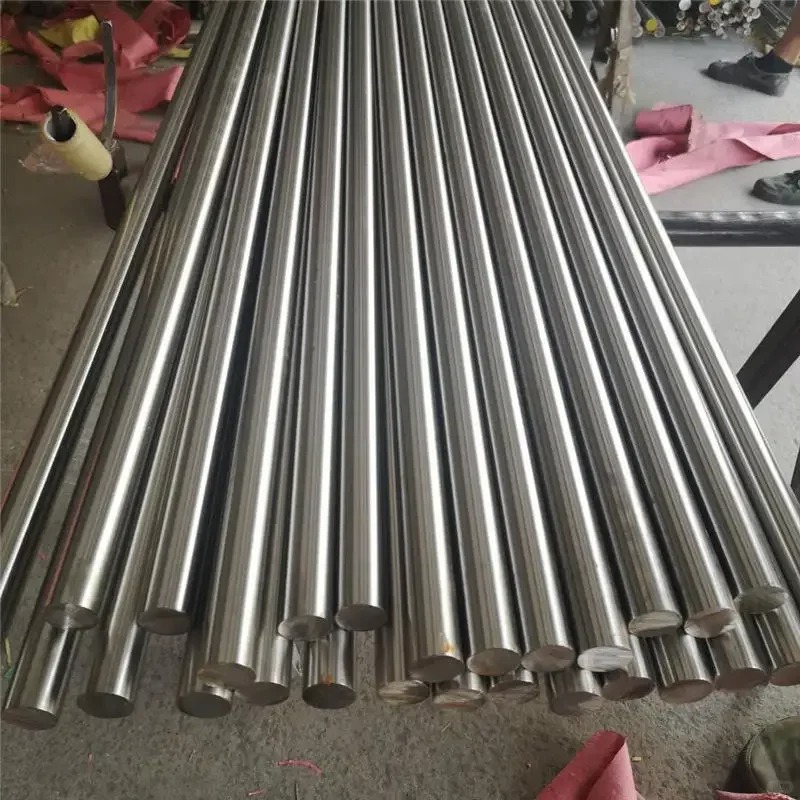
- Bar & Rod - round, flat, square, hexagonal
- Wire - for weaving mesh and cable
- Fittings - elbows, tees, reducers, flanges, couplings
- Forgings - custom shapes
- Castings - investment cast and sand cast (with modified chemistry)
Common finishes:
- No.1 / HRAP - Hot rolled, annealed & pickled - most common for plate
- 2B - Cold rolled, bright - for sheet
- No.4 / Brushed - For architectural and hygienic applications
- Pickled & Annealed - Standard for tubing and pipe
Fabrication Considerations
Welding
2205 has good weldability but requires more care than 304 or 316. The goal is to maintain a balanced austenite/ferrite ratio in the weld zone. Key points:
- Use 2209 or 2507 duplex filler metal
- Keep heat input moderate (too high = ferrite grain growth)
- Interpass temperature should be kept below 200 deg C
- Preheating is generally not required for most thicknesses
- Properly welded joints retain good corrosion resistance and toughness
- Post-weld annealing (solution treatment at 1020-1100 deg C) can restore maximum properties
Forming
2205 can be formed using standard methods, but higher forces are needed due to its high strength (roughly 1.5-2x the force of 304). It has good ductility but not as much as austenitic grades. Springback is higher due to the higher yield strength. Deep drawing is possible but requires more care than with 304/316.
Machining
2205 machines with more difficulty than 304 due to its higher strength and work-hardening rate. Recommendations:
- Use rigid setups and sharp cutting tools
- Use slower speeds and heavier feeds
- Use appropriate cutting fluids
- Carbide tools are recommended for best results
Heat Treatment
- Solution Annealing: 1020-1100 deg C (1870-2010 deg F), followed by rapid quenching (water or forced air). This produces the optimal 50/50 austenite-ferrite structure and dissolves any precipitates.
- Cannot be hardened by heat treatment - only by cold working.
- Avoid the 600-900 deg C range during slow cooling, as harmful intermetallic phases (sigma, chi) can form, reducing toughness and corrosion resistance.
Explore Related Products
Frequently Asked Questions
What is 2205 duplex stainless steel used for?
2205 duplex stainless steel is used in demanding applications where both high strength and excellent corrosion resistance are required. Common uses include: offshore oil and gas equipment, chemical processing vessels and piping, desalination plants, seawater heat exchangers, pulp and paper mill equipment, flue gas desulfurization systems, marine structures and shipbuilding components, high-pressure storage tanks, pressure vessels, bridges in corrosive environments, and mining equipment. It's especially valuable where austenitic stainless steels like 316L fail due to chloride stress corrosion cracking or lack sufficient strength.
Is 2205 better than 316 stainless steel?
2205 is better than 316 in several key ways: it has 2.5x the yield strength, better pitting and crevice corrosion resistance (higher PREN ~35 vs ~25), and excellent resistance to chloride stress corrosion cracking (316 is susceptible). However, 316 has better formability, better cryogenic toughness, is easier to weld, and is less expensive per kilogram. So 2205 is 'better' for high-strength, high-corrosion applications, but 316 is still preferred for many general-purpose, forming-intensive, or cryogenic uses. The choice depends on your specific requirements.
Will 2205 stainless steel rust?
2205 is highly corrosion-resistant and resists rusting in most environments where 304 or 316 would also resist. It actually performs better than 316L in many corrosive environments (higher PREN), especially those involving chlorides and stress corrosion cracking. However, it is not completely immune to corrosion - in extremely harsh conditions like concentrated hydrochloric acid or very high-temperature chlorides, it can still corrode. For most industrial, marine, and chemical applications, 2205 provides excellent, long-lasting corrosion resistance far superior to standard stainless steels.
Is 2205 duplex stainless steel magnetic?
Yes, 2205 is moderately magnetic due to its ~50% ferritic microstructure. Unlike fully austenitic grades like 304 and 316 which are non-magnetic when annealed, 2205 will respond noticeably to a magnet. The magnetic property can be useful for certain applications and provides a quick (though not definitive) way to distinguish duplex from austenitic stainless steels.
Can 2205 duplex stainless steel be welded?
Yes, 2205 can be welded with good results, though it requires more care and attention than austenitic grades like 304 or 316. The key is maintaining the proper 50/50 austenite-ferrite phase balance in the weld and heat-affected zone. Use 2209 or 2507 duplex filler metal, control heat input, and keep interpass temperatures below 200 deg C. Properly welded joints retain good strength, corrosion resistance, and toughness. Preheating is generally not required for most section sizes. For critical applications, post-weld solution annealing may be specified.
What does PREN mean for stainless steel?
PREN stands for Pitting Resistance Equivalent Number. It's a calculated value used to compare the pitting corrosion resistance of different stainless steel grades based on their chemical composition. The formula is: PREN = %Cr + 3.3 x %Mo + 16 x %N. Higher PREN values indicate better pitting resistance. 304 has a PREN of about 19-20, 316L is around 24-26, and 2205 duplex is approximately 34-36. Super duplex grades (like 2507) have PREN values above 40. It's a useful rule of thumb for comparing grades, though actual corrosion performance depends on many factors.
Looking for a Reliable Steel Supplier?
Rubao-Chinasteel supplies high-quality steel products at factory-direct prices. MOQ from 1 ton · ISO certified · Fast global delivery.