
201 Stainless Steel: Properties, Uses & Complete Guide
Comprehensive guide to 201 stainless steel - learn about its composition, mechanical properties, corrosion resistance, common applications, and how it compares to 304 stainless steel.
What is 201 Stainless Steel?
201 stainless steel is an austenitic stainless steel grade that was developed as a lower-cost alternative to the widely popular 304 grade. It’s part of the 200-series stainless steels, which use manganese and nitrogen to replace some of the nickel content found in 300-series grades like 304 and 316.
Also known as “17-4” stainless steel (referring to its approximate 17% chromium and 4% nickel content, not to be confused with 17-4PH precipitation hardening steel), Grade 201 offers good corrosion resistance and formability at a more economical price point.
The key difference between 201 and 304 is the nickel content: 201 contains only about 3.5-5.5% nickel compared to 8-10.5% in 304, with manganese (5.5-7.5%) added to maintain the austenitic structure. This makes 201 significantly cheaper, but with slightly reduced corrosion resistance and formability.
Chemical Composition
The chemical composition of 201 stainless steel (UNS S20100 / EN 1.4372) is:
| Element | Composition (%) |
|---|---|
| Chromium (Cr) | 16.0 - 18.0 |
| Nickel (Ni) | 3.5 - 5.5 |
| Manganese (Mn) | 5.5 - 7.5 |
| Carbon (C) | <= 0.15 |
| Silicon (Si) | <= 1.00 |
| Phosphorus (P) | <= 0.060 |
| Sulfur (S) | <= 0.030 |
| Nitrogen (N) | <= 0.25 |
| Iron (Fe) | Balance |
Why Manganese Matters in 201
In 200-series stainless steels, manganese serves as an austenite stabilizer, partially replacing the role of nickel. This is significant because:
- Cost reduction: Manganese is much cheaper than nickel
- Strength: Manganese increases tensile and yield strength
- Work hardening: 201 work-hardens faster than 304, which can be an advantage in certain applications
- Corrosion trade-off: Manganese is slightly less effective than nickel at resisting corrosion, especially in chloride environments
Mechanical Properties
| Property | Value (typical) |
|---|---|
| Tensile Strength | >= 520 MPa (75,000 psi) |
| Yield Strength (0.2% offset) | >= 275 MPa (40,000 psi) |
| Elongation (in 2") | >= 40% |
| Hardness (Rockwell B) | <= 95 HRB |
| Elastic Modulus | 193 GPa (28 x 10^6 psi) |
| Density | 7.93 g/cm3 (0.286 lb/in3) |
| Melting Range | 1400 - 1450 deg C (2550 - 2640 deg F) |
Compared to 304, 201 has higher yield and tensile strength but slightly lower ductility. The higher strength comes from the manganese and nitrogen additions.
Key Features & Benefits
1. Cost-Effective Alternative to 304
The biggest advantage of 201 is its lower price. With significantly less nickel content, 201 typically costs 20-30% less than 304 stainless steel, making it a popular choice for cost-sensitive applications where the full corrosion resistance of 304 isn’t necessary.
2. Good Corrosion Resistance (Mild Environments)
While not as corrosion-resistant as 304 or 316, 201 still provides rust and stain resistance far superior to carbon steel or galvanized steel. It performs well in:
- Indoor and dry outdoor environments
- Mild atmospheric conditions
- Fresh water exposure
- Most food processing environments (with proper cleaning)
3. High Strength
Thanks to manganese and nitrogen alloying, 201 has higher strength than 304 stainless steel. Its yield strength is about 35% higher, which means thinner material can sometimes be used to achieve the same structural performance.
4. Good Formability
Grade 201 offers reasonably good formability, though not quite as good as 304. It can be:
- Deep drawn (with slightly more force required)
- Rolled and bent
- Stamped and spun
- Roll formed into profiles
5. Magnetic Properties
Unlike 304 which is essentially non-magnetic in the annealed condition, 201 can be slightly magnetic due to its lower nickel content. Cold working increases magnetism further.
6. Good Weldability
201 can be welded by most common methods including TIG, MIG, and spot welding. However, special filler metals may be required, and weld corrosion resistance is not as good as 304. Post-weld annealing can restore corrosion resistance.
Common Applications
201 stainless steel is widely used across many industries where cost savings matter and corrosion conditions are moderate:
Architecture & Construction:
- Decorative panels and trim
- Window and door frames
- Handrails and balustrades
- Wall cladding and curtain walls
- Roofing and gutters (mild climates)
Kitchenware & Appliances:
- Sinks and basins
- Cookware and utensils
- Refrigerator panels and trim
- Kitchen equipment and worktables
- Food storage containers
Automotive & Transportation:
- Exhaust system components
- Trim and molding
- Structural components
- Trailer bodies
Consumer Products:
- Furniture and fixtures
- Lighting fixtures
- Display racks and shelves
- Watch cases and jewelry
- Luggage and travel goods
Industrial:
- Storage tanks (non-corrosive contents)
- Piping for mild chemicals
- Equipment housings and enclosures
- Heat exchangers (mild service)
201 vs 304 Stainless Steel - What’s the Difference?
| Property | 201 Stainless Steel | 304 Stainless Steel |
|---|---|---|
| Nickel Content | 3.5 - 5.5% | 8.0 - 10.5% |
| Manganese Content | 5.5 - 7.5% | <= 2.0% |
| Chromium | 16 - 18% | 18 - 20% |
| Corrosion Resistance | Good (mild environments) | Excellent (broad range) |
| Tensile Strength | >= 520 MPa | >= 515 MPa |
| Yield Strength | >= 275 MPa | >= 205 MPa |
| Formability | Good | Excellent |
| Weldability | Good | Excellent |
| Magnetic | Slightly magnetic | Non-magnetic (annealed) |
| Cost | Lower (20-30% less) | Higher |
| UNS Number | S20100 | S30400 |
When to Choose 201 Over 304
Choose 201 if:
- You need stainless steel at the lowest possible cost
- The application is in a mild, indoor, or low-corrosion environment
- Higher strength is beneficial
- Magnetic properties are acceptable
Choose 304 if:
- The application involves outdoor exposure or corrosive environments
- Maximum formability is required
- Weld corrosion resistance is critical
- Non-magnetic properties are needed
- Long-term durability is the priority
Surface Finishes Available
201 stainless steel is available in most common surface finishes:
- 2B (Mill Finish) - Bright, cold-rolled, the most common and economical
- No.4 (Brushed / Satin) - Directional brushed finish, popular for decorative use
- 8K (Mirror) - Highly polished mirror finish
- HL (Hairline) - Fine hairline texture
- BA (Bright Annealed) - Highly reflective, polished finish
- Embossed / Patterned - Various decorative patterns
The wide range of available finishes makes 201 especially popular for decorative and architectural applications where appearance matters more than maximum corrosion resistance.
Fabrication Considerations
Forming
201 can be formed and drawn, but requires more force than 304 due to its higher yield strength and faster work-hardening rate. Deep draw applications may require intermediate annealing steps.
Welding
Weldable by GTAW (TIG), GMAW (MIG), resistance welding, and laser welding. Type 308L filler is commonly used, though specialized 200-series fillers are also available. Post-weld annealing can improve corrosion resistance in the weld zone.
Machining
Fair machinability. Higher work-hardening rate means machining parameters should be adjusted accordingly. Use sharp tools and slower speeds with heavier feeds.
Polishing
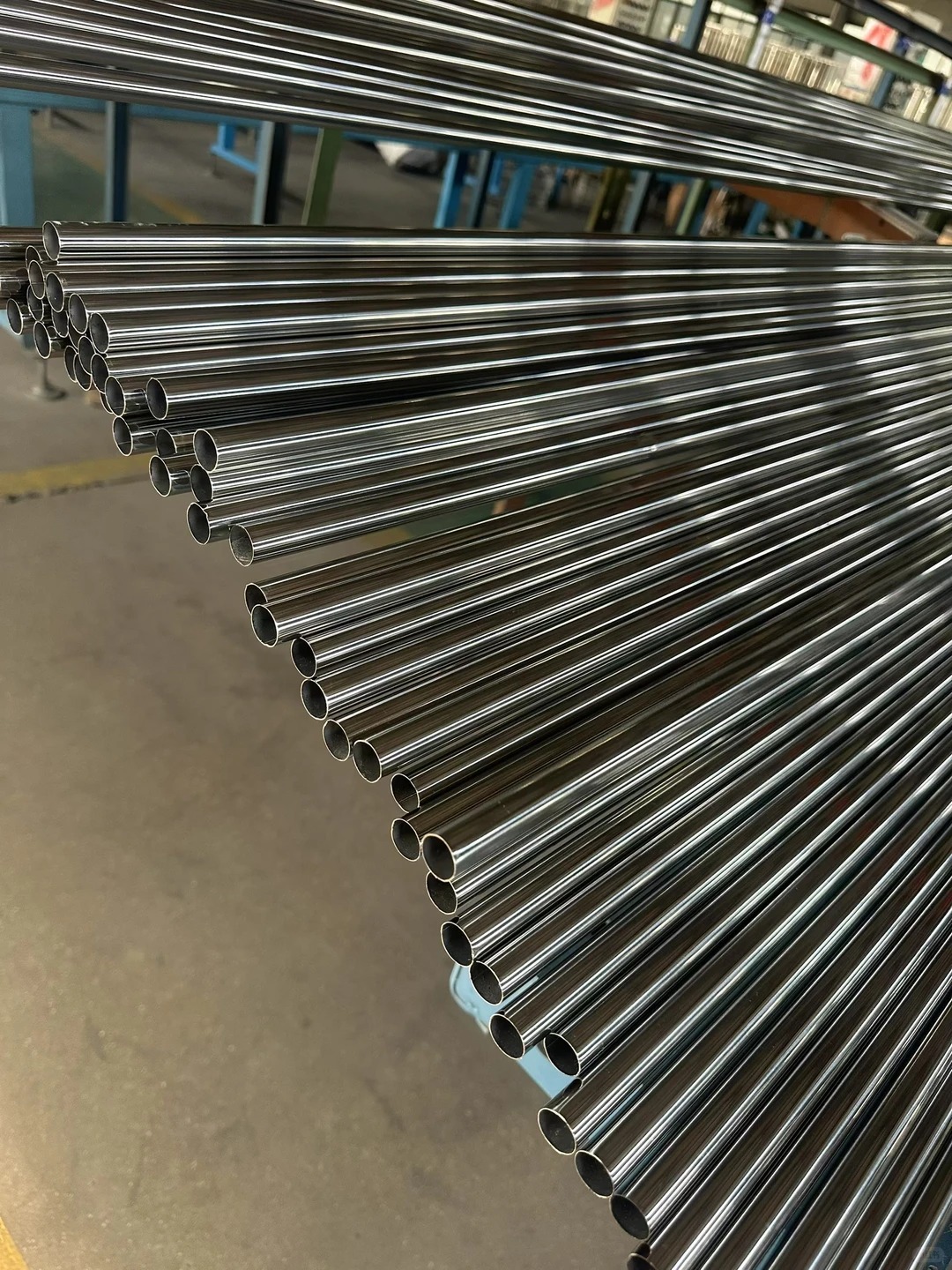
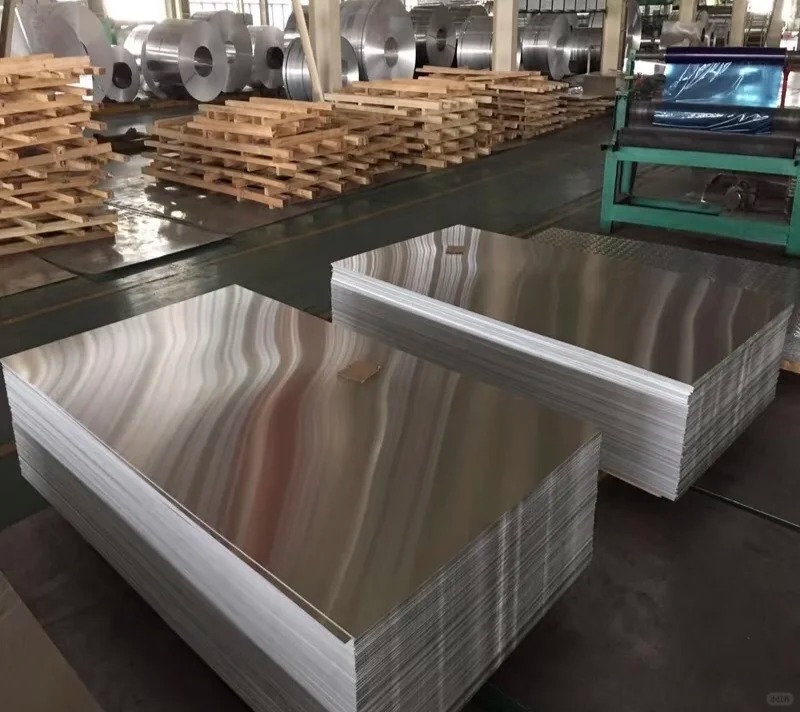
201 takes a good polish and is available in mirror (8K) finish. It’s widely used for decorative polished tubes and sheets.
Explore Related Products
Frequently Asked Questions
Is 201 stainless steel good quality?
Yes, 201 is a good quality stainless steel for its intended applications. While it doesn't match the corrosion resistance of 304 or 316, it offers excellent value for money in mild environments and is far superior to carbon steel or galvanized steel. It's especially good for decorative, indoor, and low-corrosion applications where cost is a factor.
Will 201 stainless steel rust?
201 stainless steel can rust in certain conditions, especially in saltwater, highly acidic, or chloride-rich environments. It resists rust much better than carbon steel but not as well as 304 or 316. For indoor and dry outdoor use, 201 typically provides many years of rust-free service. In coastal areas or chemical environments, 304 or 316 would be better choices.
Is 201 stainless steel food safe?
201 stainless steel is generally considered food-safe for most food applications, especially for dry or low-acid foods. However, 304 is more commonly specified in the food industry because of its better corrosion resistance, particularly with acidic foods. For commercial kitchens and food processing equipment where corrosion resistance and cleanability are critical, 304 is usually preferred.
How can you tell 201 from 304 stainless steel?
Several methods can distinguish 201 from 304: 1) Magnet test - 201 is slightly magnetic, 304 (annealed) is non-magnetic; 2) Chemical test kits - drop-on reagents that change color based on nickel content; 3) Spectrometer analysis - the most accurate method; 4) Price - 201 is typically 20-30% cheaper than 304. Note that cold-worked 304 can also become slightly magnetic, so the magnet test alone isn't definitive.
Can 201 stainless steel be welded?
Yes, 201 stainless steel can be welded using TIG, MIG, spot, and other common welding methods. Type 308L filler metal is commonly used, though 200-series specific fillers are also available. The weld zone may have reduced corrosion resistance compared to the base material, and post-weld annealing can help restore it. For critical applications requiring maximum weld corrosion resistance, 304 or 316 are better choices.
What is 201 stainless steel used for?
201 stainless steel is used in a wide range of applications including: decorative architectural panels and trim, kitchen sinks and appliances, automotive trim and exhaust components, furniture and display racks, lighting fixtures, window frames, handrails, tubing for structural and decorative use, and consumer products. It's especially popular in applications where the appearance of stainless steel is desired at a lower cost point.
Looking for a Reliable Steel Supplier?
Rubao-Chinasteel supplies high-quality steel products at factory-direct prices. MOQ from 1 ton · ISO certified · Fast global delivery.